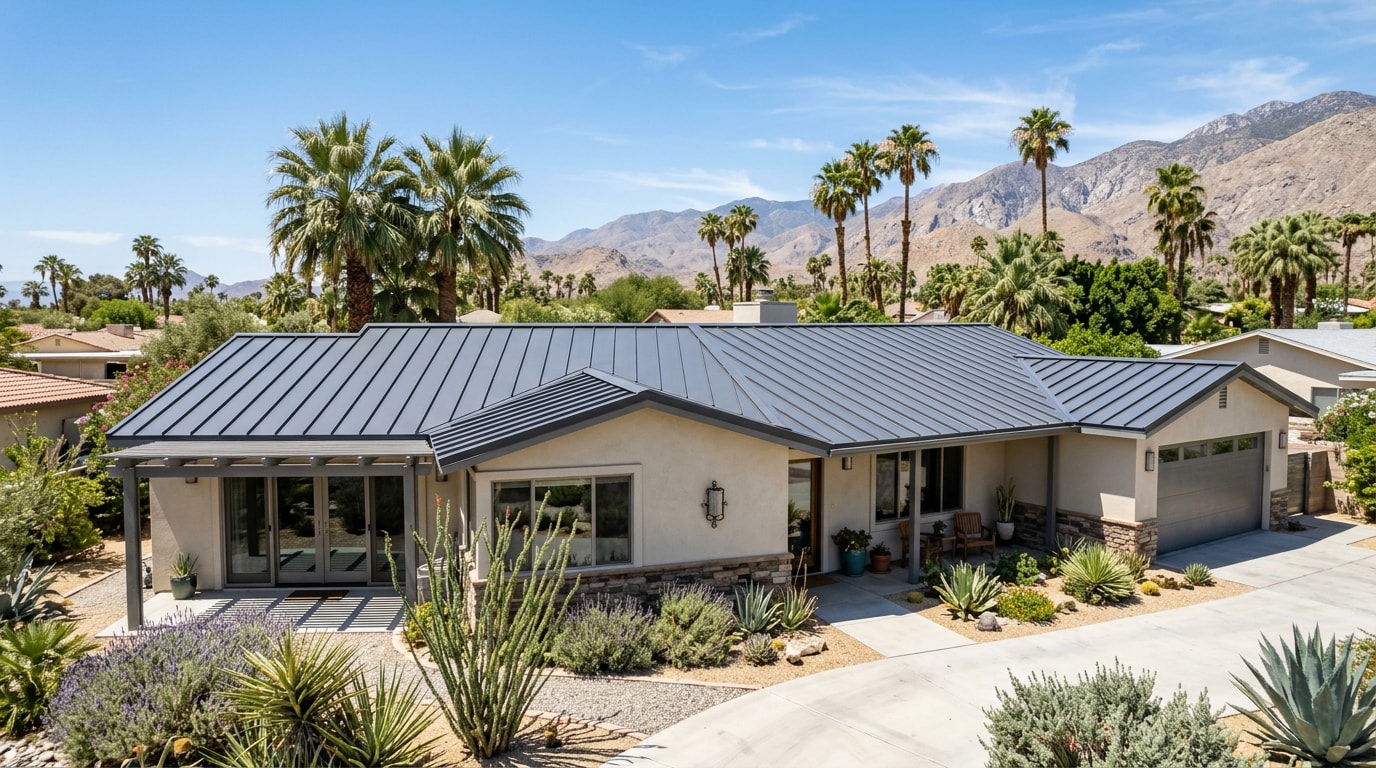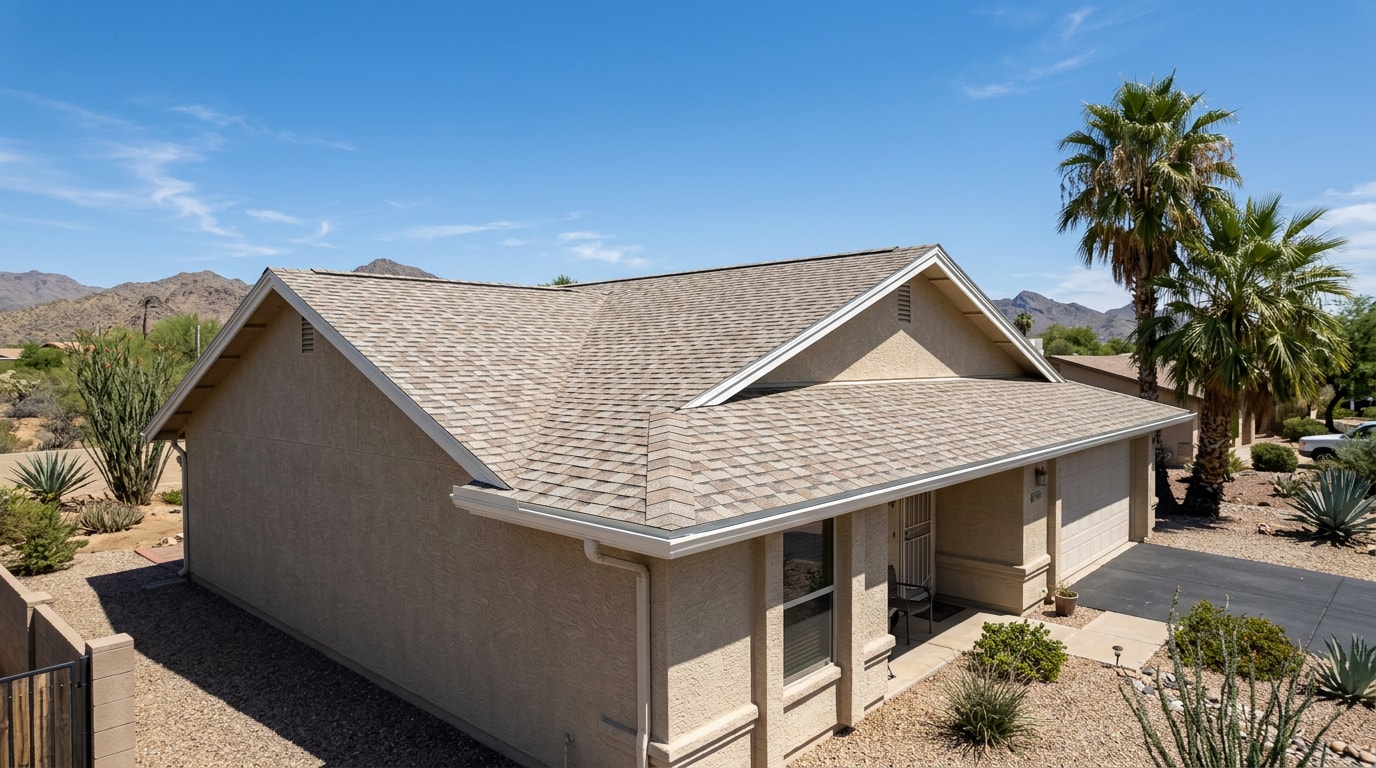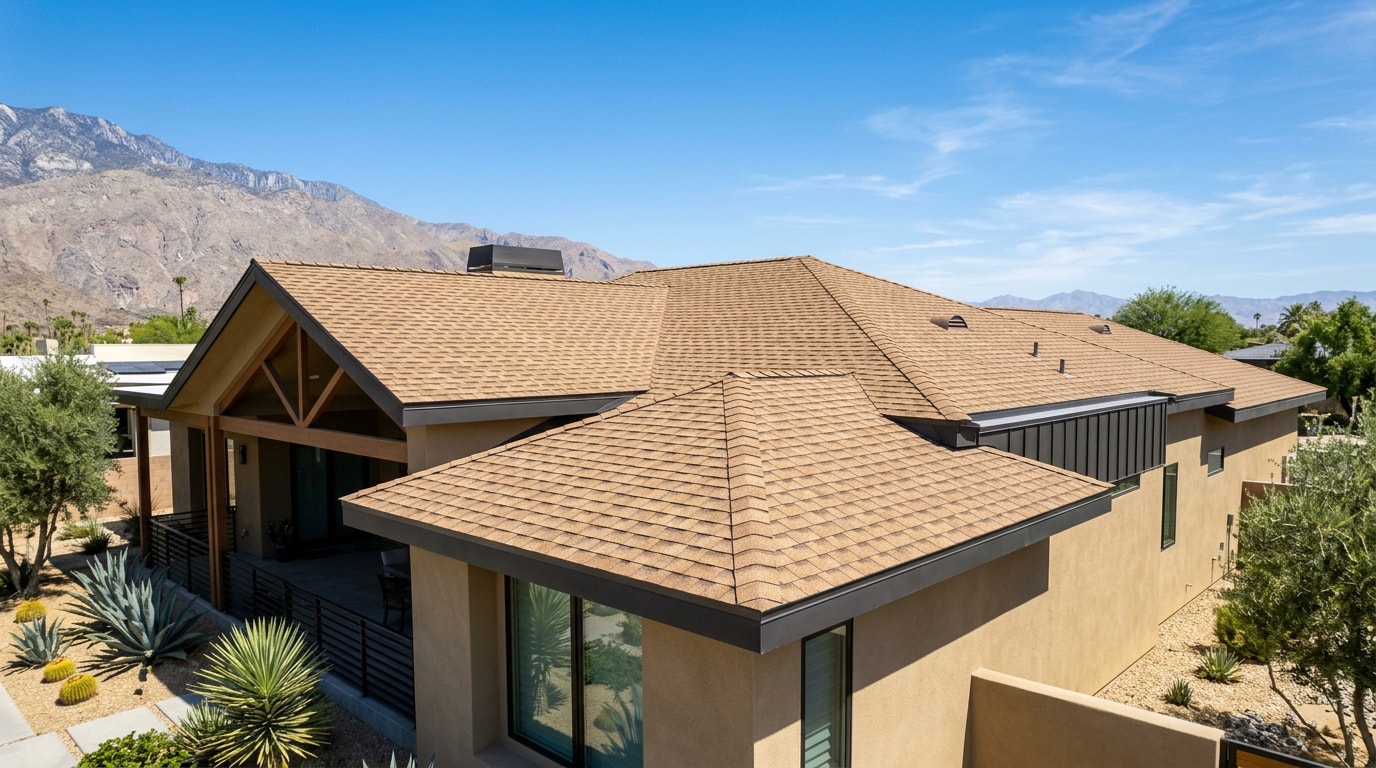
Finding the best roofing shingles in Thousand Palms, CA means solving for problems most shingle manufacturers never test for: 100+ degree days stacked back to back, blowing sand, and a sun angle that bakes a south-facing slope harder than almost anywhere else in California. This guide breaks down which shingle technologies actually hold up here, what the state requires, and how shingles stack up against tile and metal. We work on these roofs year-round, so the recommendations below reflect what we see fail and what keeps performing after a decade in Coachella Valley heat.
Key Factors for Choosing the Best Roofing Shingles in a Hot Desert Climate
Four things separate a shingle that survives a Thousand Palms summer from one that fails early:
- Fire resistance - non-negotiable given nearby dry brush and insurance requirements
- UV stability - determines how fast granules wear and colors fade
- Heat absorption - drives attic temperature and shingle aging speed
- Wind resistance - matters during monsoon-season gusts
Colorfastness and warranty coverage matter too. A shingle that fades or voids its warranty under heat isn't actually saving anyone money, no matter how cheap it looked at checkout.
Each factor maps directly to local conditions. Sustained high heat pushes UV stability and heat absorption to their limits, while occasional monsoon wind gusts test wind ratings. For a full look at installation options, our roofing services page covers what's available for Thousand Palms homes, and you can request a free estimate once you've narrowed down a shingle type.
Why Standard Shingles Struggle in Thousand Palms' Extreme Heat
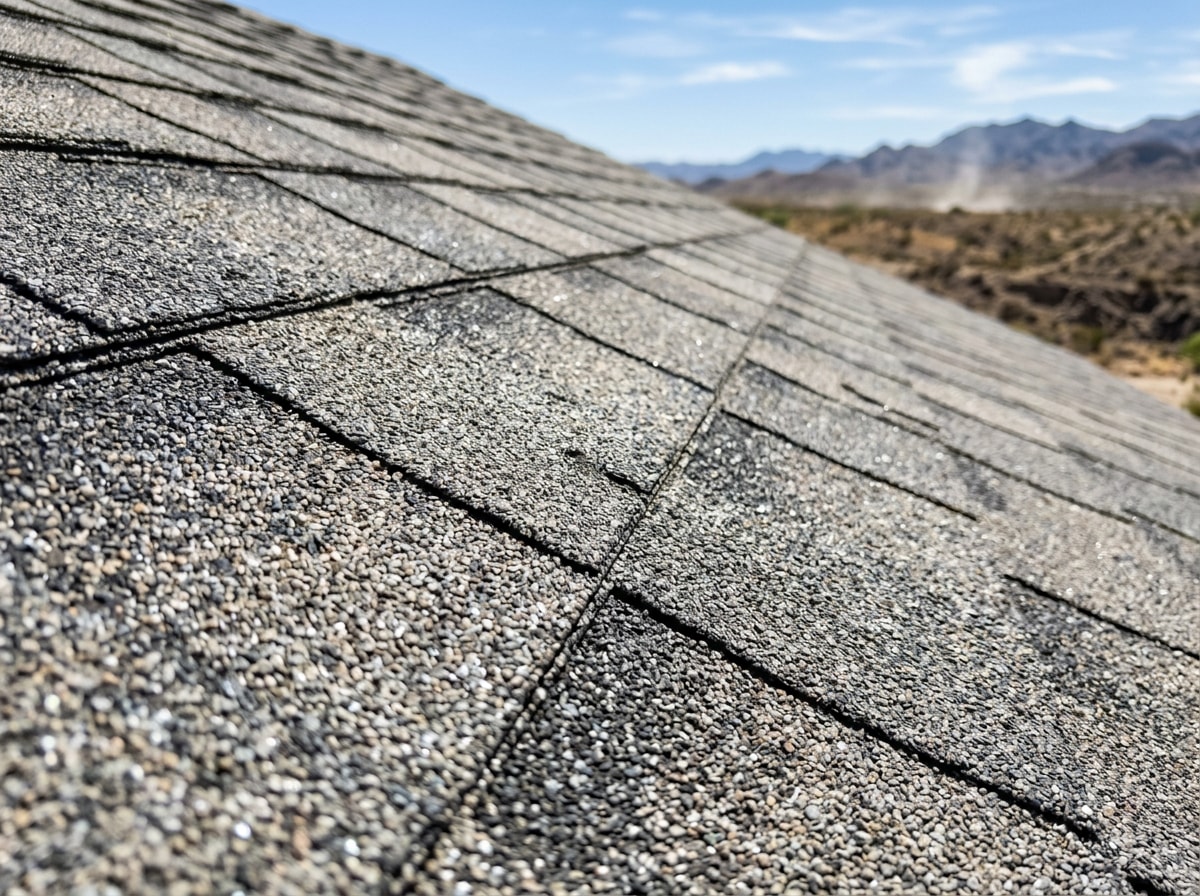
Asphalt shingles need flexibility to handle the expansion and contraction caused by daily heating and cooling. When surface temperatures stay elevated for weeks, the asphalt dries out and stiffens, losing its ability to bend without cracking.
Thousand Palms sits in a climate where the hot season lasts about 3.4 months, from early June to late September, with average daily highs above 99°F, and July runs an average high near 106°F . That kind of sustained heat, combined with blowing sand and dust, accelerates granule wear in ways milder climates rarely see.
Watch for these warning signs on an aging roof:
- Curling shingles at the edges
- Visible warping across the shingle field
- Surface cracking
- Bald, shiny patches from granule loss
Any of these points to accelerated desert wear, even on a roof that's only 10-12 years old.
One detail most shingle guides skip: research hasn't confirmed a strong effect of attic ventilation on average roof surface temperature. Ventilation actually has less effect on surface temperature than the direction a roof faces or the color of the roofing material itself , according to the National Roofing Contractors Association. That means your shingle color and roof orientation often matter more for heat control than how well your attic breathes.
Cool-Roof & Reflective Shingle Technology
Reflective granule technology is the single biggest lever for shingle performance in Thousand Palms' heat.
Cool-Roof Granules & Solar Reflectance
Cool-roof granules use specialized coatings that bounce more sunlight away from the shingle surface instead of absorbing it as heat. The benefit shows up on utility bills: cool roofing is associated with a reduction in electrical demand predicted to be 10 to 30 percent lower during peak demand season .
Thousand Palms falls within California Title 24 Climate Zone 15, which covers Palm Springs, Indio, and Banning , the same hot-desert zone classification that applies across the Coachella Valley. For steep-slope residential re-roofs in this zone, roofs must meet a minimum aged solar reflectance of 0.20 and heat emittance of 0.75, a requirement that applies to new construction and most roof replacement projects under California's Title 24 energy standards. Nationally, ENERGY STAR qualified steep-slope roof products must carry an initial solar reflectance of at least 0.25 and maintain at least 0.15 after three years , per ENERGY STAR's roof product specifications.
Several major brands build to these thresholds. GAF's Timberline HD Cool Color Series was the first energy-efficient cool asphalt shingle offered in a palette of rich, organic colors , and CertainTeed's Landmark Solaris line is rated by the Cool Roof Rating Council and meets California's Title 24 requirements for cool steep-slope roofing .
Polymer-Modified Asphalt (SBS) for Thermal Cycling
SBS polymer-modified asphalt changes the blend of the shingle's asphalt layer so it stays flexible across temperature swings instead of stiffening the way standard asphalt does. For Thousand Palms roofs, that flexibility matters less for hail, which is rare here, and more for daily thermal cycling, since the shingle expands and contracts every day the sun hits it. SBS-modified shingles resist the cracking that plagues standard asphalt after a few desert summers, making them a reasonable upgrade for west- or south-facing exposures.
Types of Shingles Best Suited to Thousand Palms Homes
Not every shingle style holds up the same way in inland desert heat. One category stands out.
Architectural / Class A Shingles
Architectural shingles are thicker than 3-tab shingles, with a layered construction that resists curling and warping better under sustained heat. They also carry a Class A fire rating, which matters given the region's dry conditions.
Manufacturer warranties often list 30 years of service, but that number rarely plays out in full here. Intense inland-valley UV exposure tends to shorten real-world lifespan in Southern California desert climates, even with correct installation. For a detailed breakdown of what roof replacement actually costs in this climate, see our guide to asphalt shingle roof replacement costs, which covers pricing and timelines for the Imperial and Coachella valleys.
Many architectural lines also build in impact resistance through thicker mats and reinforced adhesive strips, helping shingles withstand wind-driven debris during monsoon season without needing a separate product category.
California Materials: Head-to-Head Comparison
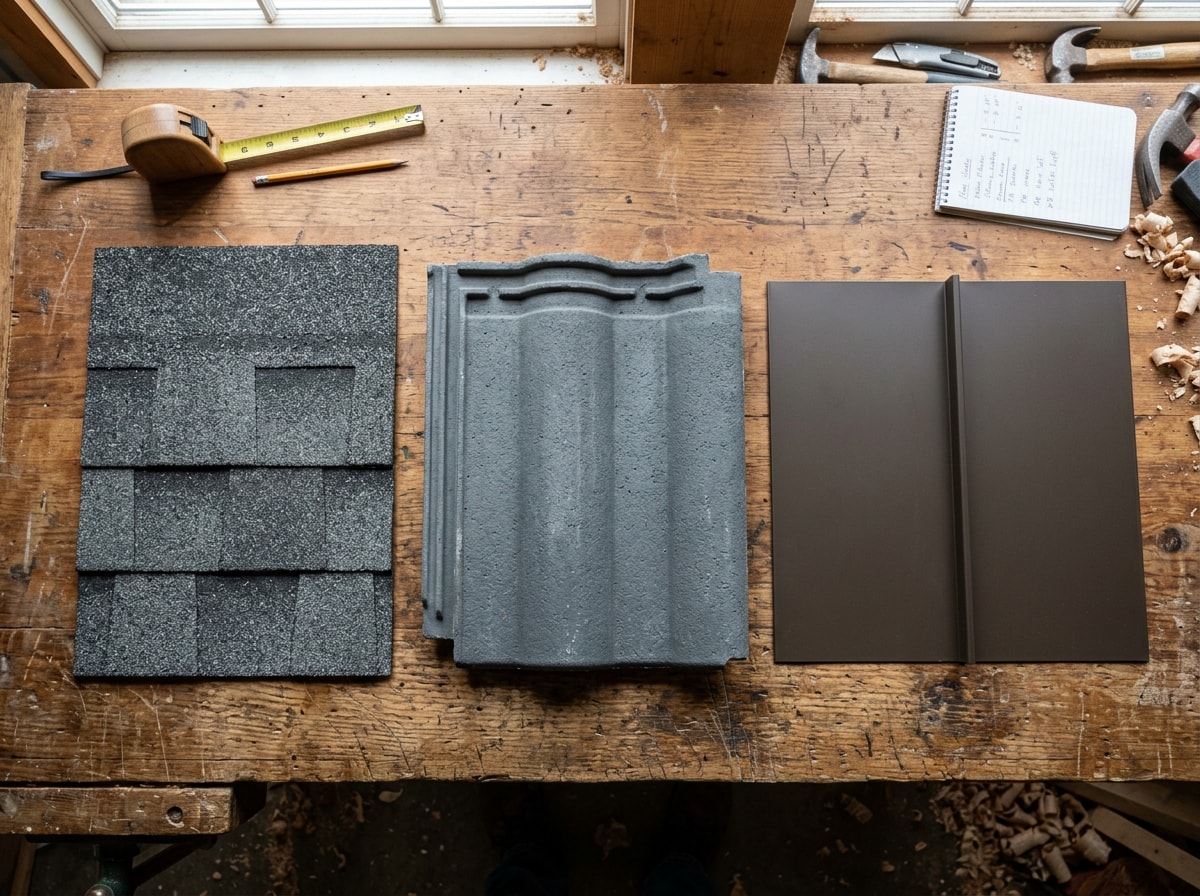
Shingles aren't the only option Thousand Palms homeowners weigh. Tile and metal come up often enough to deserve a direct comparison.
| Material | Typical Installed Cost | Realistic Desert Lifespan | Fire Rating | Weight | Cool-Roof Compliant |
|---|---|---|---|---|---|
| Architectural asphalt shingles | Lower | 20-25 years | Class A | Light | Yes (select lines) |
| Metal (standing seam) | Mid-to-high | 40-50 years | Class A | Light-moderate | Yes |
| Concrete tile | Mid-to-high | 40+ years | Class A | Heavy | Yes |
| Clay tile | High | 50+ years | Class A | Heavy | Yes |
| Slate | Highest | 75+ years | Class A | Very heavy | Yes |
Exact pricing depends heavily on roof size, pitch, tear-off needs, and which contractor you hire, so treat the table above as a starting point for comparison rather than a quote. The trade-off is consistent across the region: shingles cost less upfront and install faster, while tile and metal cost more but last two to three times longer. When weighing shingles versus tile versus metal, how long you plan to own the home usually matters more than the per-square-foot number alone.
Top Asphalt Shingle Brands for Desert Heat
Brands perform differently in heat because of granule technology, asphalt formulation, and adhesive strength. Look for heat-resilient, wind-rated lines with warranty language written for high-heat regions, not just a generic national warranty.
Owens Corning, Malarkey, GAF, and CertainTeed all offer cool-roof and SBS-modified options built for sustained heat exposure. None of these brands is objectively superior on every roof. Availability, color selection, and your contractor's installation experience with a given line often matter as much as the spec sheet.
Lifespan, Warranties, and Return on Investment
A shingle's real lifespan in a hot climate depends on UV exposure, heat cycling, roof orientation, and installation quality, not just the number printed on the warranty. Most Thousand Palms installations land closer to 20-25 years in practice rather than the full manufacturer warranty period, even on premium products.
When weighing the upfront cost of a cool-color, Title 24 compliant shingle against a cheaper option, remember that replacing a failed roof twice in 20 years typically costs more than paying for better materials once. Ask any contractor for warranty terms that specifically address heat-related degradation, not just manufacturing defects.
Our Recommendation for Your Thousand Palms Home
Owens Corning, GAF, CertainTeed, and Malarkey all belong in the conversation. The right pick depends on local availability, color preference, and which brand your contractor installs most often.
Our general recommendation: a cool-color, Class A architectural shingle with a wind rating suited to monsoon season, with SBS polymer modification if your roof gets heavy west or south sun exposure. That combination addresses UV stability, heat absorption, and wind resistance in one product instead of trading one for another. If you're also planning solar, ask about solar-ready roof installation, which coordinates shingle layout with panel mounting from the start.
This is a starting point, not a final answer. Your roof's slope, HOA rules, and budget will shift the specifics. Our crews serving Thousand Palms and the wider valley can confirm which lines are in stock and suited to your structure. Visit our homepage to see the full range of services, or go straight to a free estimate to get pricing for your home.
FAQ
What roofing material works best in a hot desert climate like Thousand Palms?
Cool-rated architectural shingles, concrete tile, or metal all perform well, depending on budget and roof style. Whichever you choose needs to meet Title 24's cool-roof reflectance standard for Climate Zone 15.
How long does a roof last in a desert climate like Thousand Palms?
Shingles typically last 20-25 years in this climate despite longer manufacturer warranties, while metal and concrete tile often reach 40-50 years with proper installation. Clay tile and slate can exceed 50 years, though both cost more upfront and add significant roof weight.
What shingle color is best for a hot climate?
Lighter, cool-rated colors generally reflect more solar energy than standard dark shingles, and several manufacturers now make dark-toned cool shingles that meet Title 24's reflectance threshold without sacrificing curb appeal. Since roof orientation affects surface temperature as much as ventilation does, color choice is one of the more practical levers homeowners have.
How much does a new shingle roof cost in the Coachella Valley?
Shingle roofs are generally the most budget-friendly option compared to metal or tile, though exact pricing depends on roof size, pitch, and tear-off requirements. See our asphalt shingle roof replacement cost guide for a detailed regional breakdown, or request a free estimate for a number specific to your home.
What type of roofing material is best for my home?
It depends on your home's architectural style, HOA restrictions, budget, and roof slope rather than any single "best" material. The head-to-head comparison above is a good starting point for narrowing choices before requesting quotes from a licensed roofing contractor.