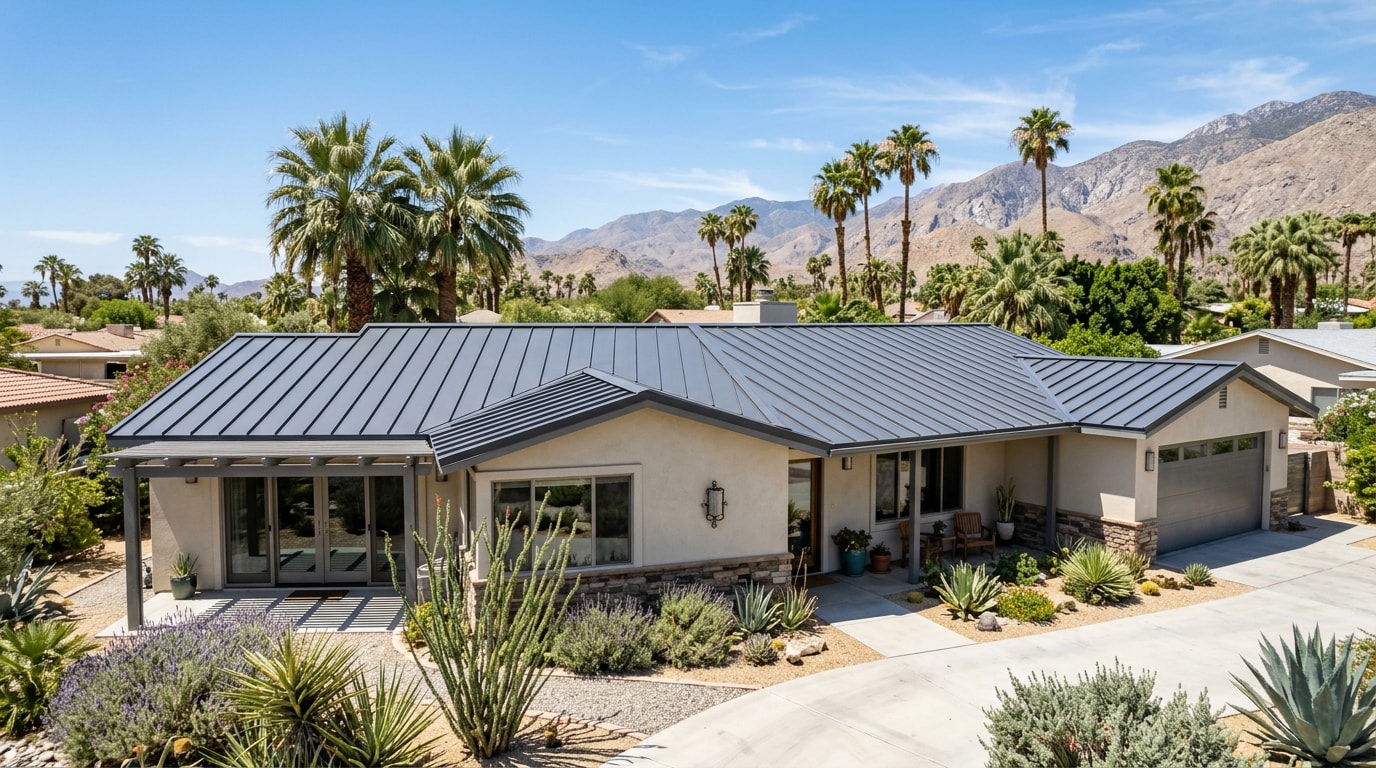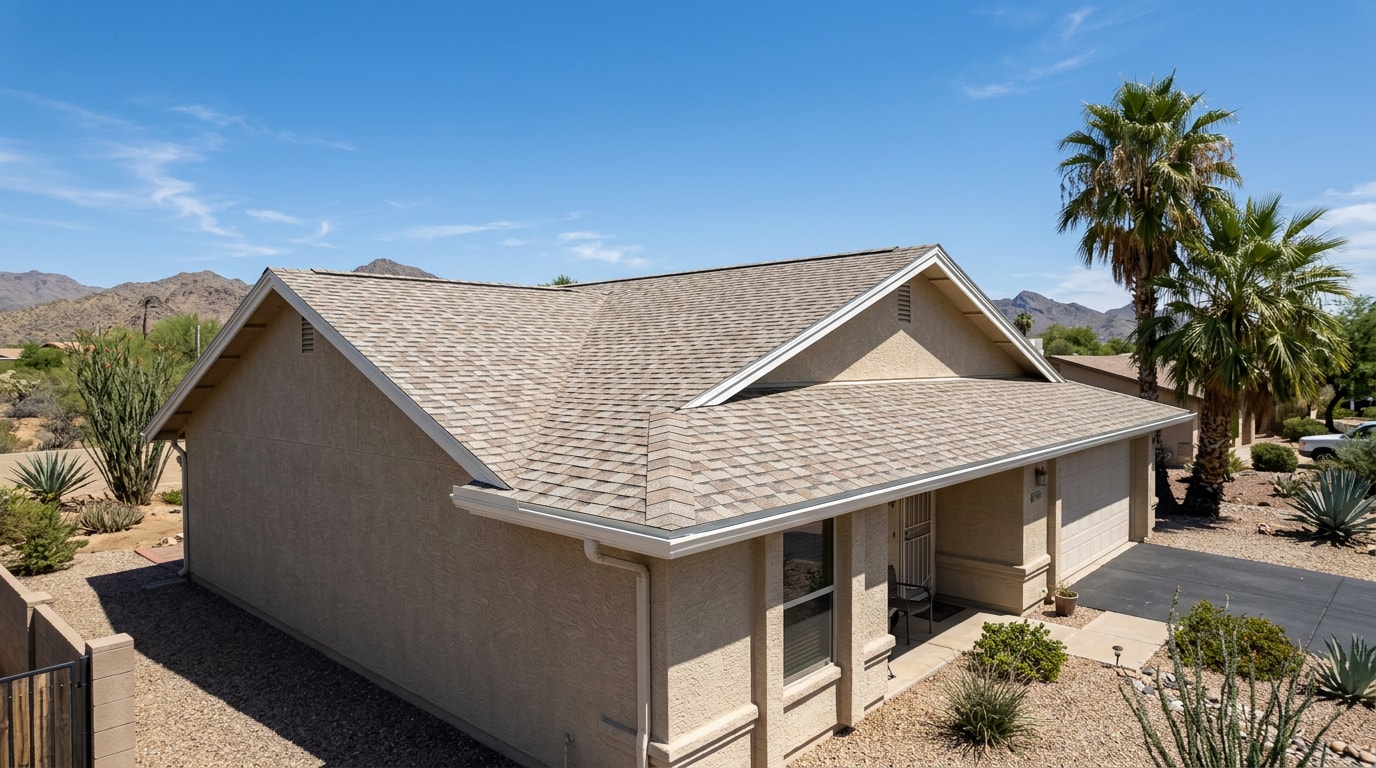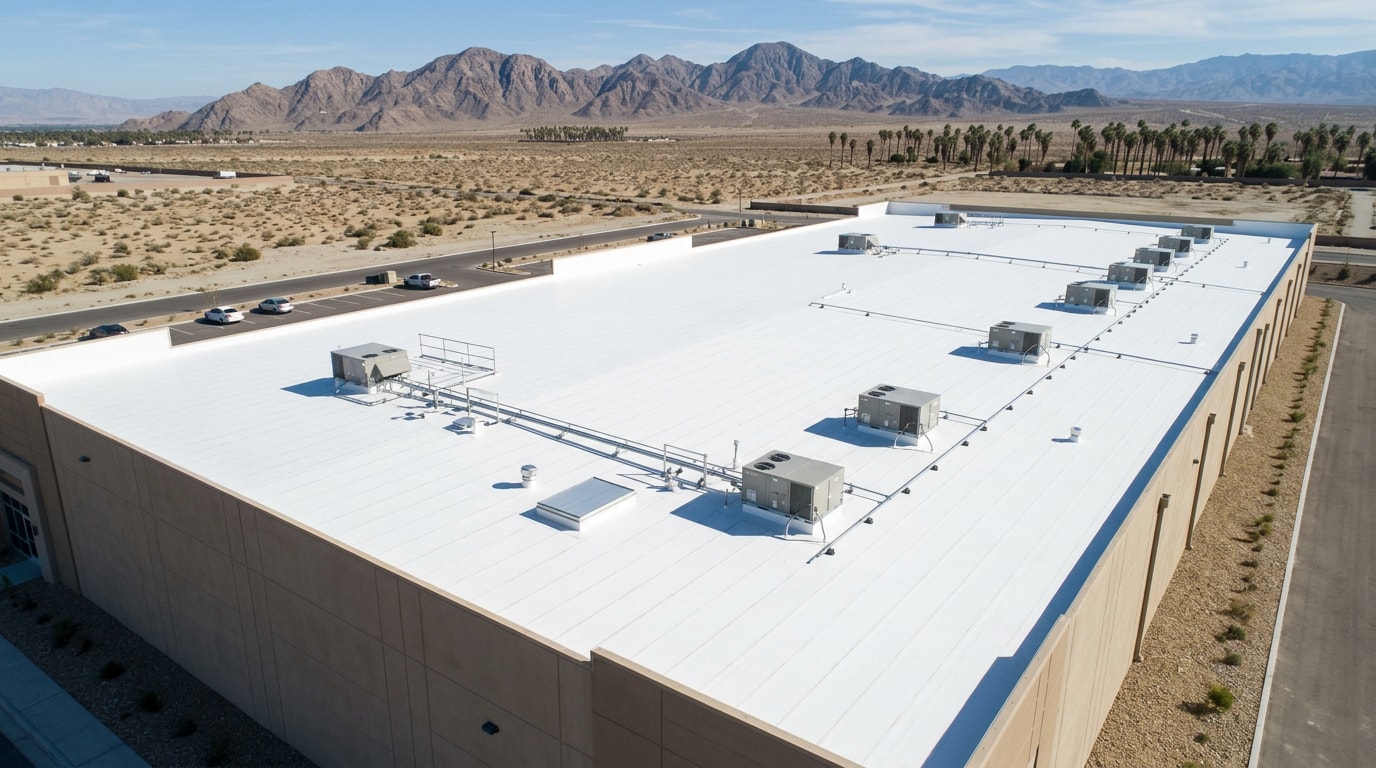
Choosing among the commercial roofing systems Palm Desert, CA property owners have available is not a five-minute decision. Few U.S. climates put a flat roof through sharper daily swings between blistering afternoon sun and cool desert nights, and that cycling is what ages a membrane faster than almost anything else. This guide compares the systems, walks through installation and repair-versus-replacement decisions, and flags a 2026 code change that affects nearly every commercial reroof in the Coachella Valley.
Commercial Roofing Systems We Install in Palm Desert, CA
Nearly every commercial building in Palm Desert has a flat or low-slope roof, which narrows the decision to a handful of membrane and coating systems built for extreme heat. The right choice depends on your building's slope, budget, and how much thermal cycling the roof needs to absorb each year.
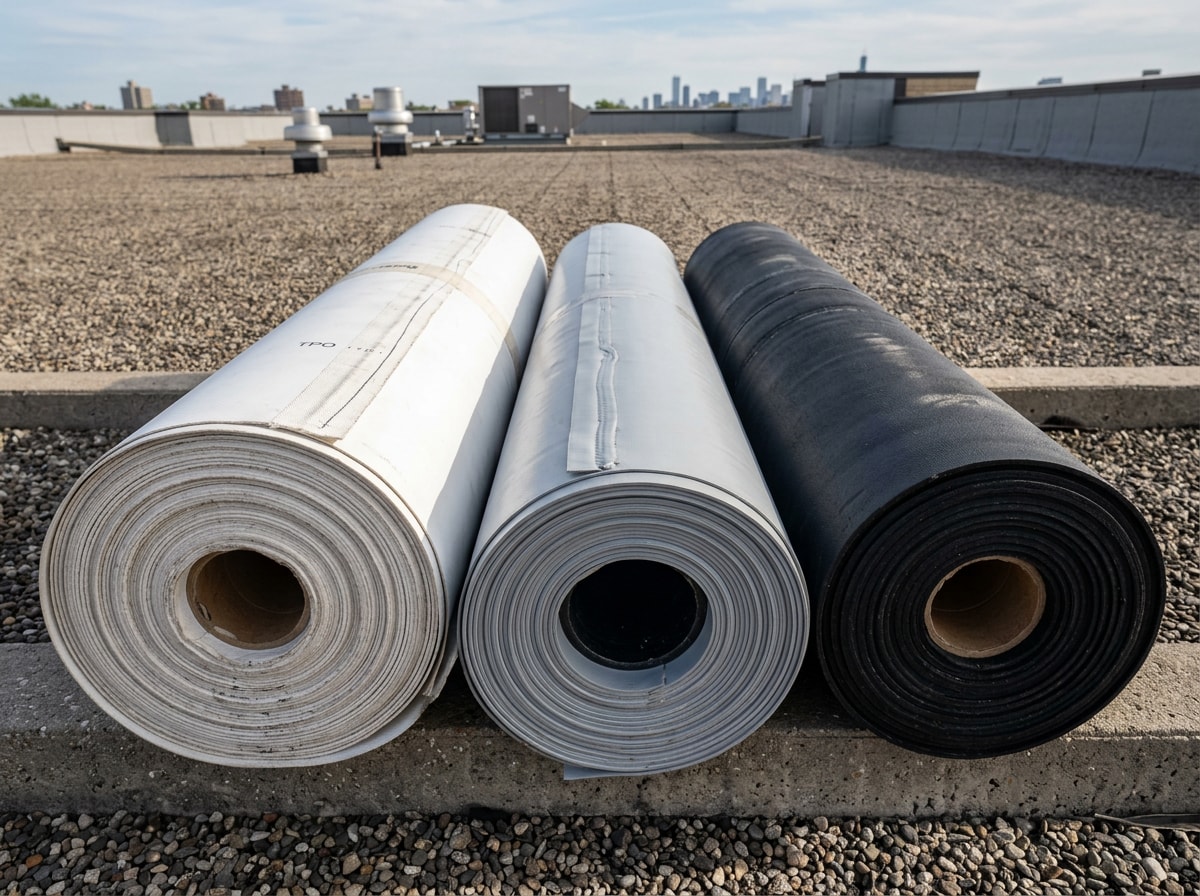
The core commercial roofing systems available today include TPO, PVC, EPDM, modified bitumen, and metal. Each has a different balance of cost, lifespan, and desert-heat suitability.
| System | Typical Lifespan | Approx. Installed Cost/Sq Ft | Desert-Heat Suitability |
|---|---|---|---|
| TPO (flat roof membrane) | 15-25 years | $5.50-$8.50 | High, reflective, heat-welded seams |
| PVC | 20-30 years | $6.50-$10.00 | High, strong chemical and UV resistance |
| EPDM | 15-25 years | $4.50-$7.50 | Moderate, dark membranes absorb more heat |
| Modified bitumen | 15-20 years | $4.00-$7.00 | Moderate, multi-ply, durable but heavier |
| Metal | 30-50 years | $8.00-$14.00 | High, reflective coatings available |
Treat these as planning estimates, not fixed quotes. Final pricing depends on building size, roof access, and current material costs. The National Roofing Contractors Association publishes updated technical guidance on these systems; its membrane manual offers industry-trusted best practices for low-slope membrane roof systems, including built-up, polymer-modified bitumen, liquid-applied, EPDM, thermoplastic (PVC, TPO), and thermoset membranes , which is worth reviewing before you lock in a spec. Explore the full lineup on our roofing services page, or see current options for roof installation directly.
One note on "cool roof" claims: the ENERGY STAR label most property owners grew up seeing on roofing products no longer applies. The ENERGY STAR certification program for roofing products officially ended on June 1, 2022, at which point no roofing products in the market are certified to ENERGY STAR by order of the U.S. Environmental Protection Agency.
The Cool Roof Rating Council now recommends specifiers reference the CRRC-1 program instead, so that solar reflectance, thermal emittance, and SRI values used for compliance are independently obtained, verified, and publicly accessible. If a sales rep still points to an ENERGY STAR sticker as proof of performance, ask for the CRRC rating number instead.
Spray Foam Roofing for Desert Energy Efficiency
Spray foam roofing (SPF) is a seamless, fully adhered system sprayed directly onto the existing deck, then topped with a protective reflective coating. Because it has no seams, it holds up well against the daily expansion and contraction Palm Desert roofs experience from sun exposure.
SPF also carries strong insulating value, which matters when a roof deck swings from scorching daytime heat to cooler desert nights. A fresh topcoat renewed every several years can extend an SPF system's service life well past what a single-ply membrane achieves without a full tear-off. The Spray Polyurethane Foam Alliance is the national trade association for the SPF industry and maintains technical resources on performance in hot-climate commercial applications. If you're already planning rooftop solar, ask about solar-ready roof installation, since coordinating the roof and the racking plan up front avoids re-flashing penetrations twice.
Commercial Roof Installation Process
A proper commercial roof installation follows a specific sequence, regardless of which system you choose.
- Deck prep and inspection
- Insulation layout
- Membrane attachment
- Flashing and perimeter detailing at every edge, curb, and penetration
- Manufacturer-required documentation that protects your warranty
One early decision is tear-off versus recover, meaning whether the old roofing comes off completely or the new membrane goes over it. That call depends on the deck's condition and local code allowances. On projects we've scoped across the Coachella Valley, roofs that skipped a proper moisture survey before a recover job are the ones that end up with trapped moisture and early blistering, so that step is not optional in this climate.
Budget and financing are worth discussing early, since re-roofing costs vary widely based on square footage, insulation upgrades, and access. Ready to scope a project? Request a free inspection and quote before committing to a system.
Commercial Roof Repair
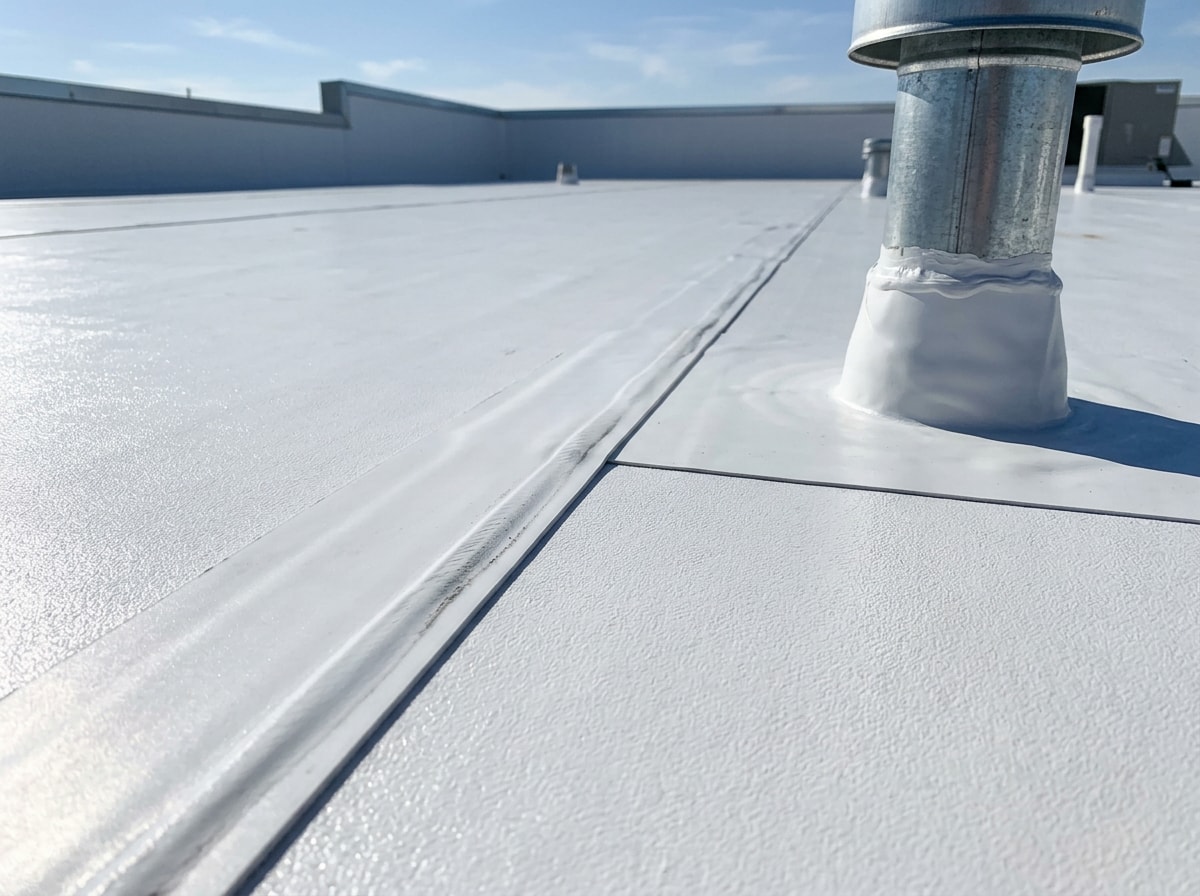
Desert thermal cycling turns small problems into expensive ones fast. A hairline crack in a membrane or a slightly loose flashing seam widens every time the roof heats and cools, eventually leading to active leaks.
A typical commercial roof repair visit addresses leak repair at seams and penetrations, flashing repair around curbs and parapets, and resealing of aging joints. Repair scopes also commonly include:
- Storm-damage restoration after wind or monsoon events
- Patching isolated membrane punctures or blisters
- Emergency repair for active leaks threatening interior operations
Roof Replacement: When Repair Isn't Enough
Not every roof problem can be patched indefinitely. Widespread membrane failure, a roof nearing the end of its expected service life, or leaks that keep recurring in different spots all signal it's time to plan a commercial roof replacement rather than another round of repairs.
A full tear-off is usually the right call once the existing membrane and insulation have degraded past the point of a reliable recover job. Understanding your roof's expected lifecycle, and tracking where it sits on that timeline, makes the re-roof decision less reactive and more of a planned capital project. For a cost breakdown specific to this market, see our Palm Desert roofing replacement cost and timeline guide.
Here's the part most roofing guides skip: if you're replacing more than half of a low-slope commercial roof, California's energy code now requires more than just picking a light color. The 2025 Building Energy Efficiency Standards under Title 24, Part 6, took effect January 1, 2026, and apply to permit applications submitted on or after that date. Under the cool-roof provisions, a qualifying low-slope roof must be certified by the Cool Roof Rating Council and meet published minimum reflectance and emittance guidelines before it will pass inspection. Confirm your contractor is pulling CRRC-rated product data sheets, not just quoting a color.
Proactive Commercial Roof Maintenance & Warranty Plans
A documented maintenance contract is one of the most cost-effective things a building owner can do to protect a roof investment. Regular visits catch small issues, like a cracked seam or a clogged drain, before they turn into leaks or structural concerns.
A solid roof inspection schedule typically includes:
- Two inspections a year, timed for spring and fall, to catch heat and storm-related wear separately
- Drain and scupper cleaning to prevent ponding after rain events
- Seam and flashing resealing as part of routine upkeep
Keeping these records on file also helps preserve manufacturer and workmanship warranty coverage, which can be voided by neglected maintenance.
Common Commercial Roofing Problems in Palm Desert
Desert heat cycling pushes roofing materials through more daily stress than milder climates ever would. That extra strain shows up in three recurring failure patterns local building owners should watch for.
Blistering and Membrane Degradation
Repeated expansion and contraction from intense heat causes membrane blistering, where trapped air or moisture forms raised bubbles in the roofing surface. Over time, this thermal cycling weakens the membrane's structure and speeds up overall degradation, shortening the system's usable life well before its rated lifespan.
Ponding Water and Poor Drainage
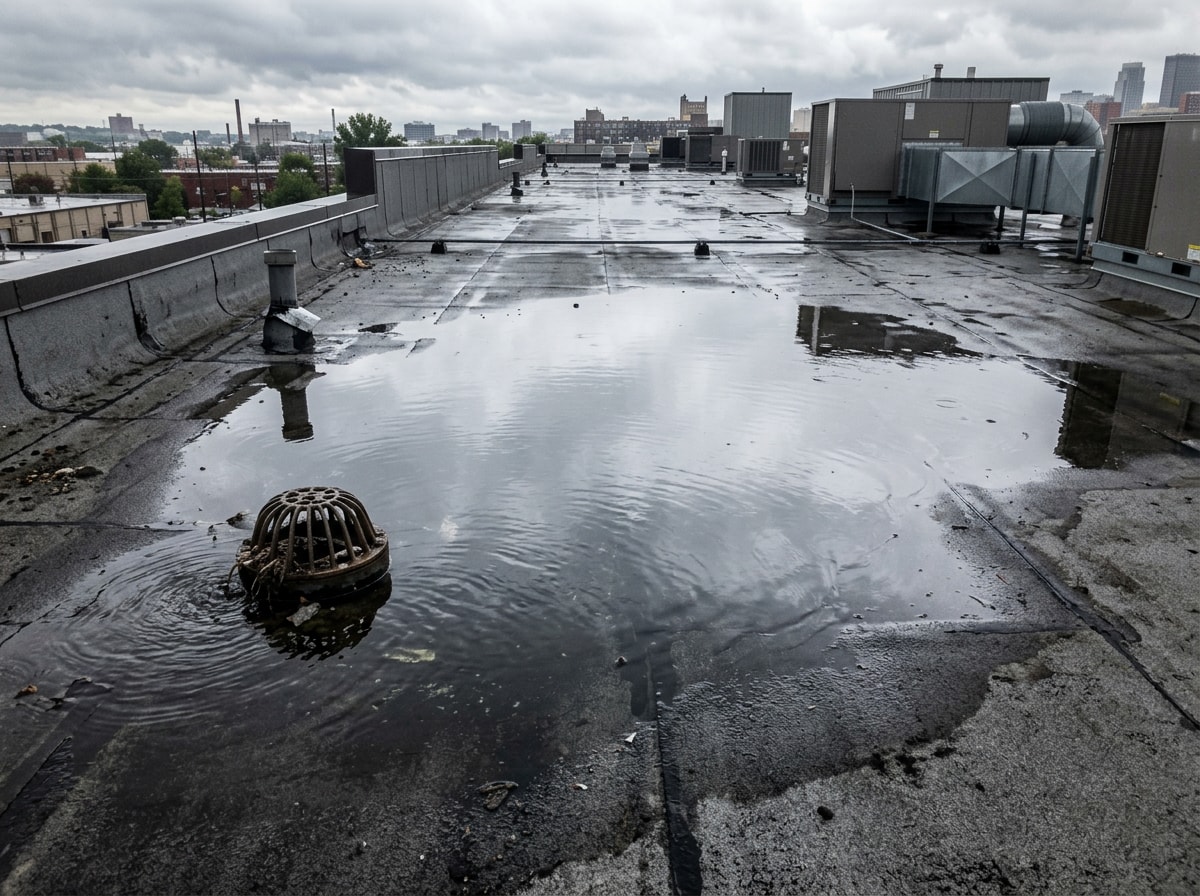
Ponding water forms when a flat roof's slope or drainage system can't move rainfall off the surface fast enough. Standing water adds structural weight, accelerates material breakdown, and creates a prime environment for leaks if the drainage design has flaws or has settled unevenly over time.
Compromised Flashing and Joint Failures
Roof flashing seals the vulnerable points where the membrane meets walls, curbs, vents, and other penetrations. When flashing cracks or separates, it creates a direct path for water intrusion, and a joint failure in one spot can quietly damage insulation and decking long before a leak becomes visible indoors.
Why Choose a Professional Commercial Roofing Contractor in Palm Desert
Not every roofing company is equipped to handle this climate well. Look for a licensed contractor with active insurance, verifiable experience with desert-specific systems, and a track record of standing behind their workmanship. A reputable commercial roofing company should also offer clear warranty terms and explain trade-offs between systems rather than pushing one option by default.
We work across the Coachella Valley, including Palm Desert, and bring that same inspection standard to every roof we scope. Learn more about our full range of work on the homepage before requesting a quote.
FAQ
What is the best commercial roofing system?
There's no single best system. It depends on your roof's slope, budget, and sun exposure. TPO is the most common default for flat commercial roofs in Palm Desert due to its reflectivity and cost balance.
How long does a commercial roof last?
Lifespan ranges from 15 to 30 years depending on the system. EPDM and modified bitumen sit on the shorter end, while PVC and metal often last longer with proper maintenance.
How much does commercial roof replacement cost per square foot?
Most commercial roof replacements in this region run roughly $4.50 to $12 per square foot. Final pricing depends on roof condition, access difficulty, and the system selected.
What maintenance is required after installation in Palm Desert, CA?
Plan on two inspections a year, routine drain and scupper clearing, and periodic flashing and seam checks to catch heat-related wear early.
Does Palm Desert require cool roofs on commercial buildings?
Yes, for most low-slope commercial reroofs. California's Title 24 energy code requires CRRC-certified reflective roofing on qualifying projects, and the current standards cycle took effect January 1, 2026.
Can you install a new commercial roof over an existing one?
Sometimes. A recover is only appropriate when the existing deck and insulation are dry and structurally sound, and local code allows it. A roof inspection determines whether tear-off is required instead.
Are there rebates for commercial cool roof installation?
Some utility and local energy programs offer incentives for reflective roofing. Availability changes often, so check current local and utility rebate listings before budgeting.
Ready to compare systems for your building? Get a free estimate and we'll walk you through the right fit for your roof, your budget, and this climate.