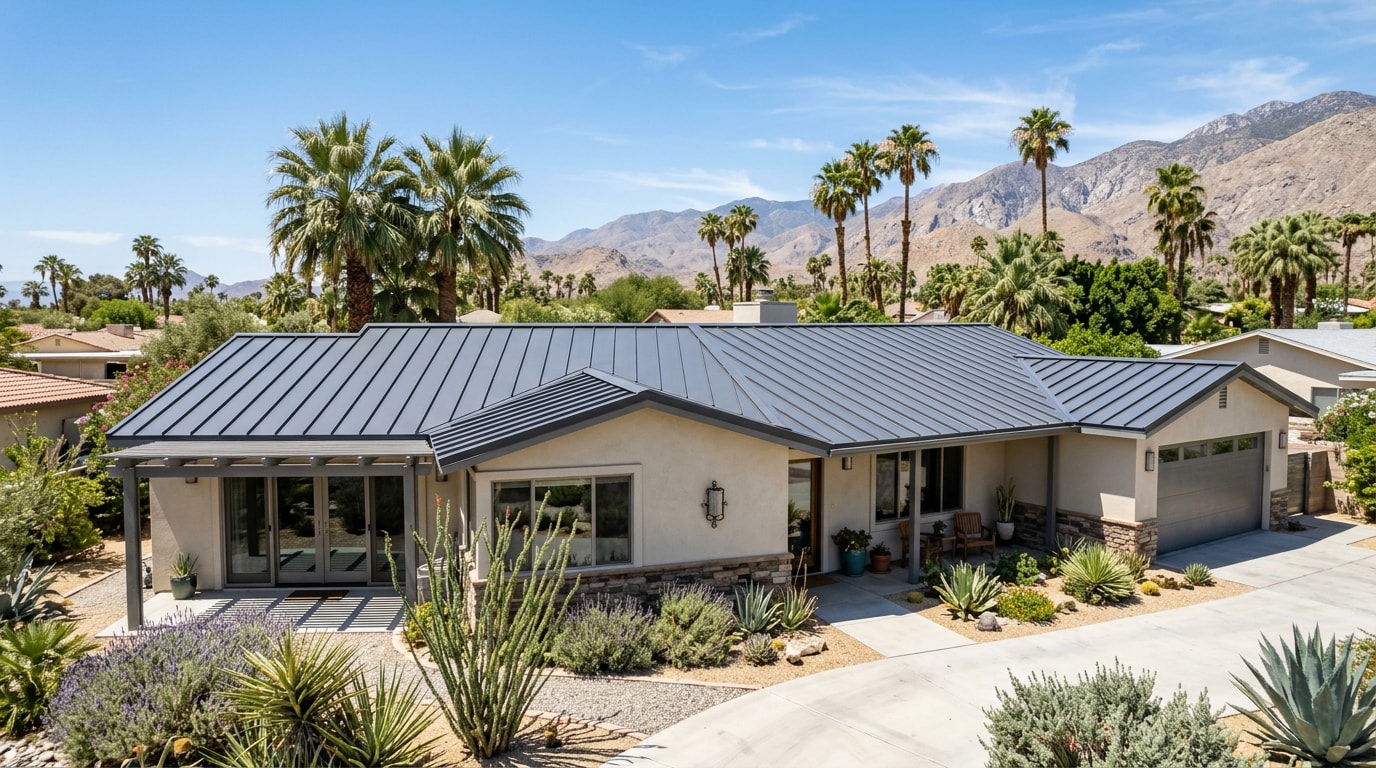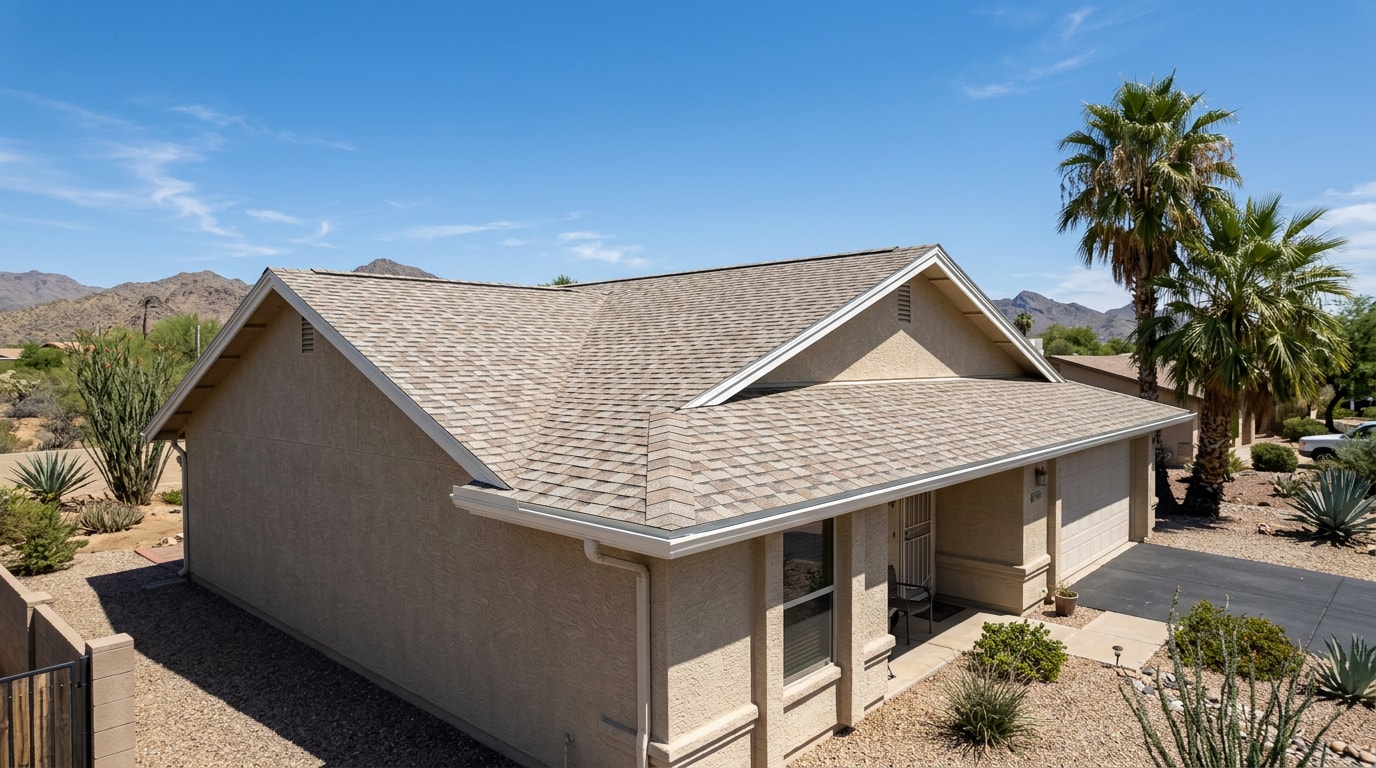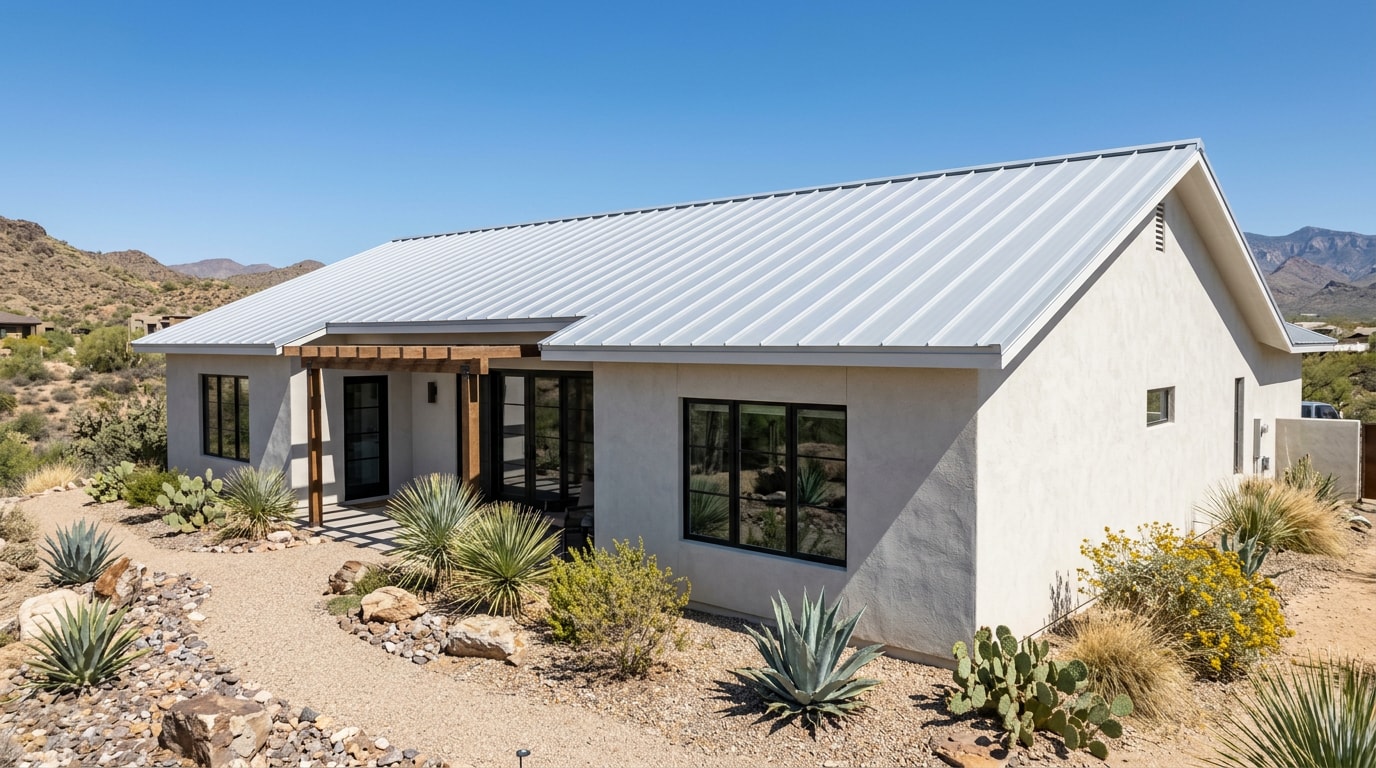
Metal roof installation in Brawley, CA has to survive 110°F summer stretches, sudden monsoon wind, and blowing Imperial Valley dust, conditions that wear out a typical shingle roof fast. Done right, a metal system can outlast three asphalt re-roofs on the same house. This guide walks through what the installation actually involves, what it costs in 2026, and which permit and licensing rules apply before a crew ever climbs a ladder.
Why Brawley Homeowners Are Switching to Metal Roofs
Brawley sits in California Title 24 Climate Zone 15, the hottest zone in the state's building energy code, which covers Imperial County along with Palm Springs, Indio, and El Centro. That designation triggers mandatory cool-roof compliance on most re-roofs, and reflective metal panels are one of the easiest ways to meet it without changing the look of the home.
A properly installed metal roof can last 40 to 70 years with routine maintenance, far past the 15-to-20-year life of a typical asphalt shingle roof. Reflective coatings bounce solar radiation away from the structure instead of absorbing it, which can meaningfully cut attic heat gain during the hottest stretch of summer.
None of that holds up if the installation itself is rushed. Panels that are misaligned, under-fastened, or paired with the wrong underlayment can trap heat, leak during monsoon storms, or void the manufacturer's warranty. We see this most often on older Brawley re-roofs: a previous crew skipped sealant at the ridge closure, and the first real monsoon storm found every gap. Material quality matters, but workmanship is what actually determines whether a homeowner gets the lifespan they paid for.
What Metal Roof Installation Costs in Brawley, CA (2026)
Nationally, standing seam metal roofing runs about $10 to $16 per square foot installed, while corrugated panels typically cost $7 to $12 per square foot, both figures covering materials and labor. Inland Southern California markets, similar to the Central Valley, generally see lower installed costs than coastal metros like San Diego or San Francisco because labor rates and material logistics cost less outside dense urban areas.
Brawley and the wider Imperial Valley track closer to the national standing-seam range than the high end seen on the coast, though freight distance for metal coil delivery into Imperial County can add a modest premium compared to metros with closer distribution centers. A written, on-site quote is still the only reliable number.
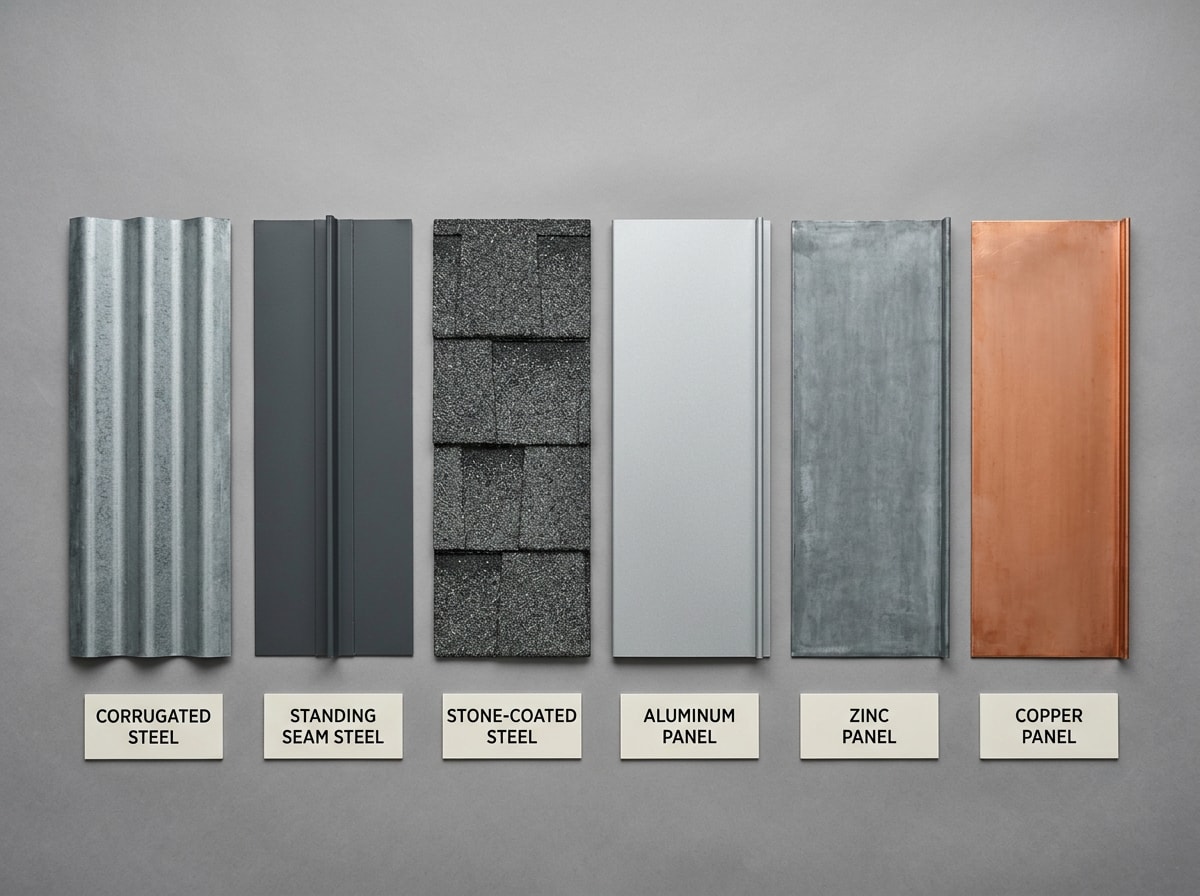
| Metal Roofing Material | Estimated Cost per Sq. Ft. (Installed) |
|---|---|
| Corrugated steel | $7 – $12 |
| Standing seam steel | $10 – $16 |
| Stone-coated steel | $9 – $15 |
| Aluminum | $9 – $17 |
| Zinc (standing seam) | $18 – $25 |
| Copper | $20 – $30+ |
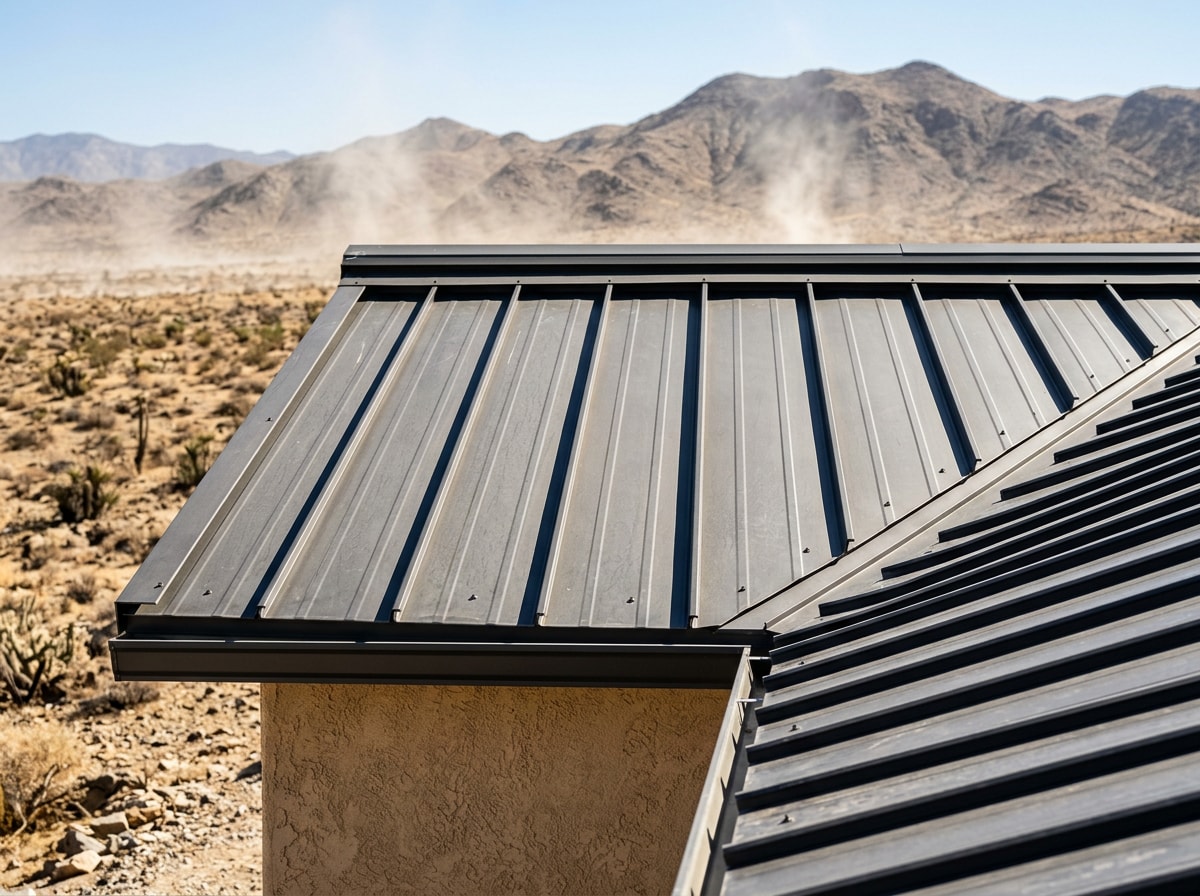
Corrugated panels remain the most budget-friendly option and a common choice for agricultural-adjacent properties around Brawley. Standing seam costs more but offers a cleaner look and fewer exposed fasteners, which matters in a high-wind, high-dust environment. Copper and zinc sit at the top of the range and are usually chosen for architectural accent work rather than everyday residential durability needs.
Because Brawley falls in a mandatory cool-roof zone, reflective metal systems may also help offset summer cooling costs over time. The U.S. Department of Energy's Federal Energy Management Program outlines how cool roof products reduce cooling loads in hot climates like the Imperial Valley. Over a 40-to-70-year lifespan, that efficiency plus the avoided cost of two or three shingle replacements narrows the price gap considerably.
Want an exact number instead of a range? Request a free estimate and a crew will measure the roof in person before quoting.
Tools and Materials a Professional Crew Uses
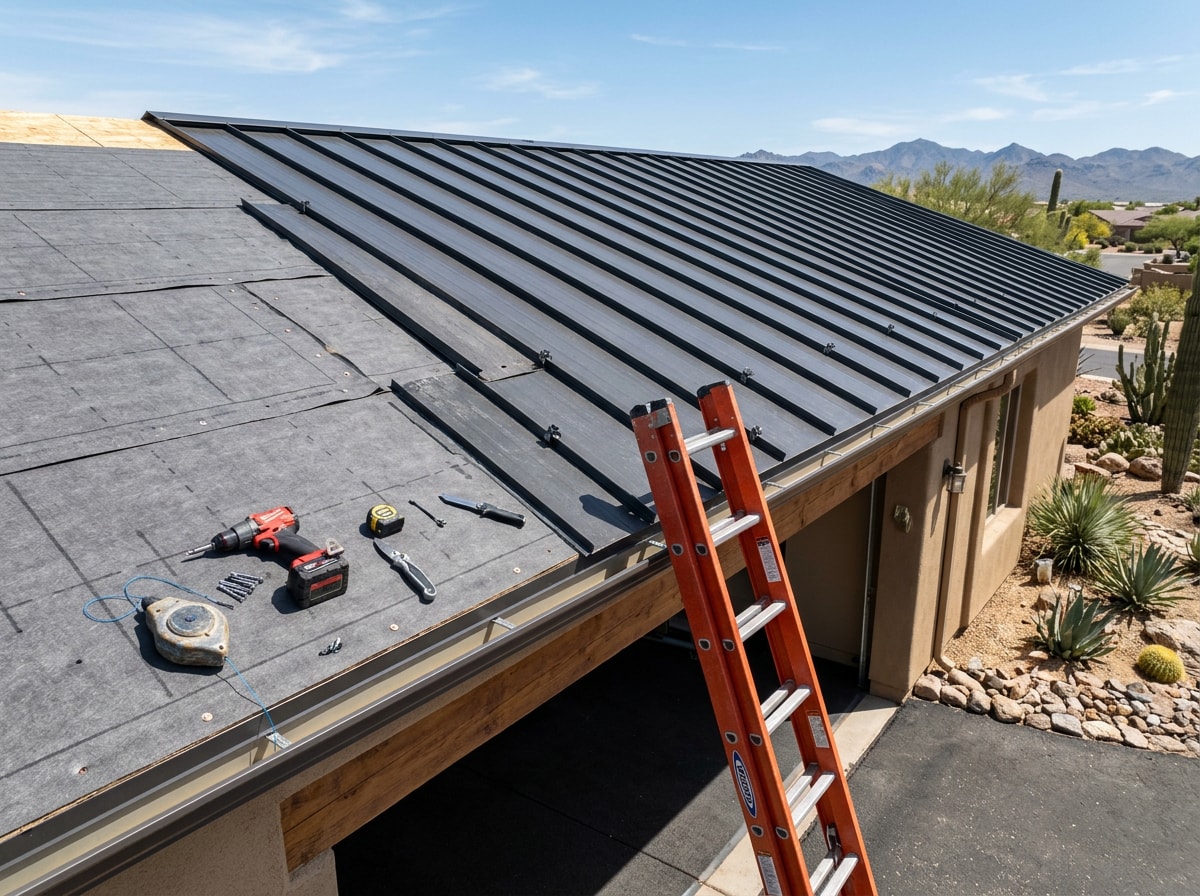
Knowing the standard toolkit and material list helps homeowners compare quotes and spot a corner-cutting bid before signing anything.
Core tools:
- Chalk line for straight panel layout
- Aviation snips for trim cuts around vents and valleys
- Torque-adjustable drill to avoid over-driving fasteners
- Tape measure and a ladder rated for the roof height
- Caulking gun for sealant at penetrations
Core materials:
- Underlayment for the moisture barrier between deck and metal
- Ridge caps to finish the roof peak
- Gable and eave trim to close off roof edges
- Sidewall flashing to direct water away from wall-to-roof transitions
- Sealant for seams, screws, and flashing joints
Skipping or under-specifying any one of these components is a common reason a metal roof underperforms its expected lifespan, even when the panels themselves are high quality. A roof inspection before the project starts can confirm the deck is ready to support a full material list like this one.
The Metal Roof Installation Process, Step by Step
This is the sequence a professional crew follows on installation day, and it doubles as a checklist for vetting a contractor's process before signing a contract.
- Pull permits. Most jurisdictions, including unincorporated Imperial County, require a permit for a full re-roof or recover installation. Imperial County Planning & Development Services publishes the minimum building permit submittal requirements for residential work, and a licensed contractor should handle this step as part of the quote.
- Measure the roof. Crews calculate total roof area, add 10 to 15 percent extra material for waste and cuts, then confirm the pitch meets the panel system's minimum slope, usually 3:12 for standing seam.
- Remove the old roofing. Tear-off exposes the deck for inspection and prevents old, uneven shingles from telegraphing bumps through the new metal. Crews work in sections and time the tear-off around the forecast, especially during summer heat.
- Inspect and repair the deck. Soft spots, rot, and prior water damage get replaced before anything else happens. A roof inspection service can catch issues a homeowner wouldn't see from the ground, like termite damage or sagging rafters.
- Install underlayment. Synthetic or self-adhering underlayment rolls out next, overlapped per manufacturer specs. The International Code Council's residential code spells out which ASTM underlayment standards apply to steep-slope roofs, and a reputable contractor should know which one their installation follows.
- Install drip edge and flashing. These pieces direct runoff into gutters and seal roof penetrations like vents and chimneys, which is where most leaks actually start.
- Lay out and align panels. Crews snap a chalk line and work bottom-to-top, checking alignment every few panels so a small error doesn't compound into a crooked ridge line by the time they reach the peak.
- Fasten the panels. Screws go through the flat of the panel at manufacturer-specified spacing. Imperial Valley's wide daily temperature swings make correct torque more important here than in a milder coastal climate, since metal expands and contracts more over a 24-hour cycle in the desert.
- Install ridge caps and closure strips. These seal the gaps where the panel profile would otherwise let in wind-driven dust and rain.
- Final inspection and cleanup. A quality-control walk checks fastener patterns and flashing seals, followed by a magnetic sweep for stray screws and a homeowner walkthrough of the warranty terms.
Permits, Codes, and Licensing in Imperial County
Skipping the permit step can create real problems later, with insurance claims or when the home is eventually sold. Permit requirements and inspection schedules vary by scope and jurisdiction, so confirming directly with the county or city building department before tear-off begins is worth the extra phone call.
California also requires an active contractor license for any roofing project valued above $500. Homeowners can verify a contractor's license status through the CSLB's free online lookup tool before signing a contract or handing over a deposit. A roof replacement that starts without a verified license or a pulled permit is a liability a homeowner shouldn't have to carry.
Metal Roofing vs. Other Roofing Materials in Brawley
Brawley homes use a mix of asphalt shingle, clay or concrete tile, flat/built-up roofing, and metal. Each performs differently in desert heat.
| Material | Typical Lifespan | Desert Heat Performance | Upfront Cost |
|---|---|---|---|
| Asphalt shingle | 15–20 years | Absorbs heat, degrades faster under UV | Lowest |
| Clay/concrete tile | 40–60 years | Good thermal mass, heavy | Moderate–High |
| Flat/built-up | 15–25 years | Needs reflective coating to perform well | Moderate |
| Metal (standing seam) | 40–70 years | Reflects heat, handles wind and dust well | Higher |
Asphalt costs the least to install, which is why some homeowners still choose it despite the shorter lifespan. Tile performs well in desert heat but adds structural weight that not every roof deck can carry without reinforcement. For anyone planning to stay in their home long term, metal's durability and lower lifetime cost usually outweigh the higher starting price. A solar-ready roof installation is also worth asking about if solar panels are part of the longer-term plan, since the roof and the mounting system go in together instead of twice.
Homeowners outside Brawley dealing with the same climate and code questions can see how the process plays out for other roof types in this residential roofing replacement guide for Salton Sea, CA.
FAQ
How do you install metal roofing over shingles in Brawley, CA?
In most cases, yes, metal roofing can go over an existing shingle layer as a recover installation, but it depends on the condition of the roof underneath. A contractor needs to confirm the deck can handle the added weight and that there's no trapped moisture or rot before approving an overlay. Local building codes may also cap how many layers a roof can carry, so this decision should go through a licensed contractor rather than a general assumption.
What does a metal roof cost in Brawley, CA?
Most metal roof installation projects in Brawley fall in the $10 to $16 per square foot range for standing seam steel, with corrugated panels running lower at $7 to $12. A reliable estimate requires an on-site measurement, since roof complexity, material choice, and tear-off needs affect the final number more than any regional average can.
Which roofing material is best for Brawley's climate?
Metal and tile both hold up well against Brawley's heat and wind, but metal wins on weight and lifespan per dollar. Asphalt shingle is the cheapest upfront option and still common, but it has the shortest lifespan in high-UV, high-heat conditions. The right answer usually comes down to how long the homeowner plans to stay in the house and what the roof deck can structurally support.
What kind of licensing do roofers need in California?
California licensing is handled through the Department of Consumer Affairs' Contractors State License Board, or CSLB. Contractors need an active CSLB license to legally work on roofing projects valued above $500, and most roofing contractors also carry a bond as part of that licensing. Homeowners can verify a contractor's license status through the CSLB's public lookup tool before signing any contract.
Metal roof vs. shingles: what's the real trade-off?
Metal roofing holds up better against heat, wind, hail, and water than standard asphalt shingles, and it needs very little maintenance once installed. The main trade-off is upfront price, since shingles cost less to install initially, which is why some homeowners still choose them despite the shorter 15-to-20-year lifespan. For long-term owners, metal's durability and lower lifetime cost usually outweigh the higher starting price.
Ready to see what metal roof installation looks like for your specific Brawley home? Get a free estimate from a team that works across Brawley, CA and the rest of the Imperial Valley, or browse the full roofing services lineup on {{SITE_URL}} before you decide.