Roofing terminology in Desert Hot Springs, CA matters more than it does in milder climates, because the San Gorgonio Pass wind corridor and decades-old flat roofs create failure points that generic glossaries never mention. Knowing the difference between modified bitumen and TPO, or why edge flashing takes more abuse here than almost anywhere else in the Coachella Valley, helps you read an inspection report without guessing. This guide covers roof structure, materials, measurement terms, a quick-reference glossary, and the FAQs homeowners ask most.
If you're comparing options for your own property, browse our roofing services in Desert Hot Springs before deciding what fits your roof type.
Roofing Structure and Components
Every roof is a structural skeleton covered by protective layers, and these are the terms homeowners hear first during an inspection or estimate walkthrough.
Eaves and Soffits
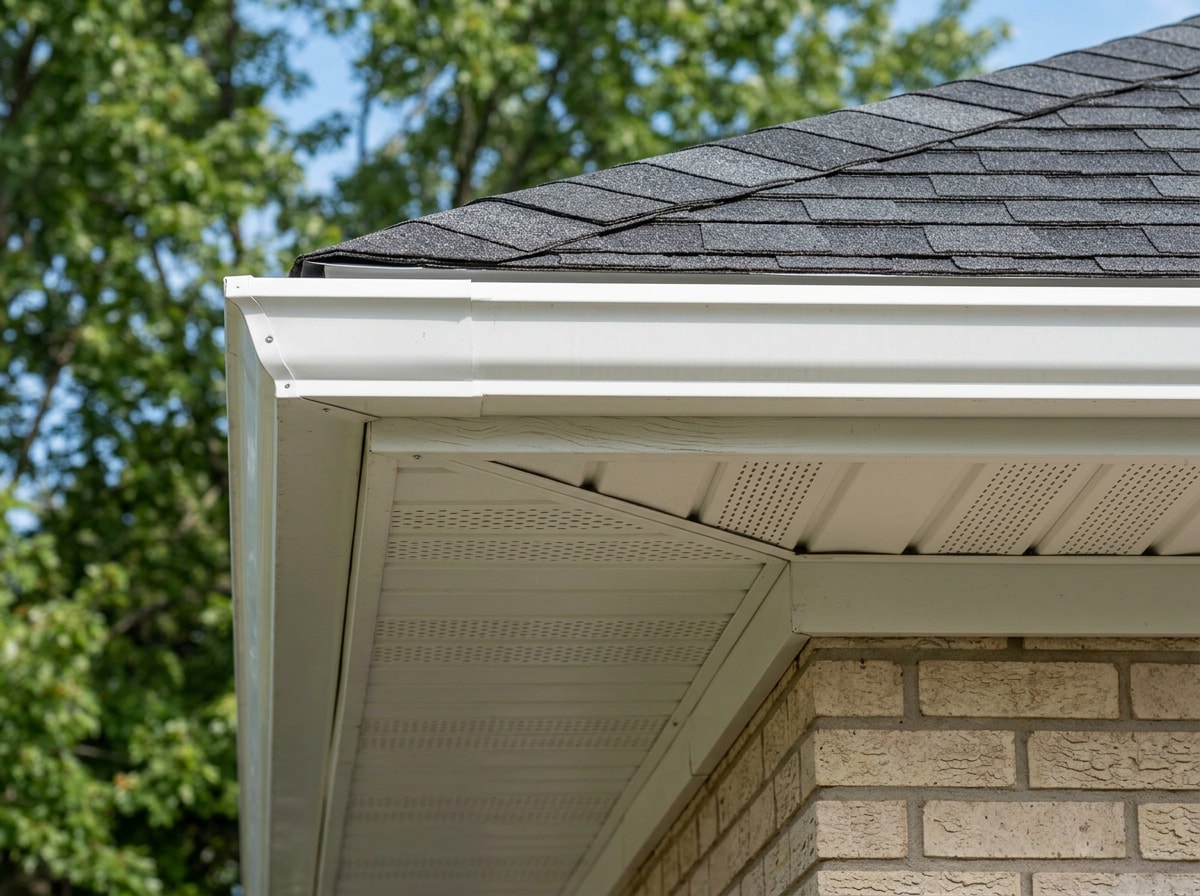
The eaves are the lower edges of a roof that overhang the exterior walls. The soffit is the finished underside material that covers that overhang.
Together they shelter the wall below and house ventilation openings that let air move through the attic space. In a hot desert climate, soffit vents do more work than in milder regions. Attic ventilation pulls superheated air out of the roof cavity, which lowers cooling costs and protects materials from premature heat damage. Blocked or painted-over soffit vents are a common issue on older Desert Hot Springs homes.
Ridge, Hip, and Valley
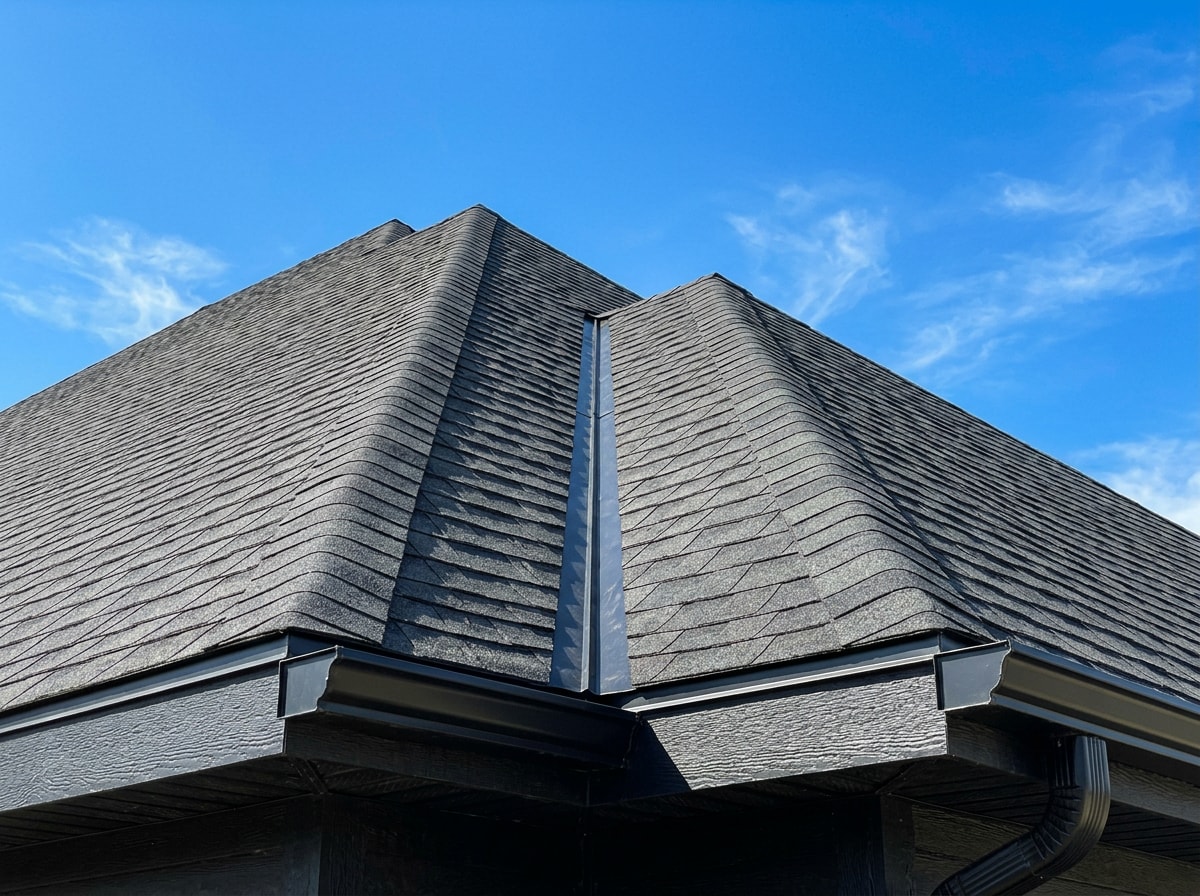
A ridge is the horizontal line at the top of a roof where two slopes meet. A hip is the sloped edge formed where two roof planes intersect at an angle, running from ridge to eave. A valley is the internal angle where two slopes meet and funnel water downward, making it the most leak-prone junction on most roofs.
Valleys always require flashing, a metal or membrane barrier installed to redirect water away from seams. The International Residential Code sets minimum standards for valley flashing and underlayment because this detail fails more often than almost any other roof component when installed incorrectly, as detailed in the IRC's roof assemblies chapter.
Roofing Materials for Desert Hot Springs Homes
Material choice here is shaped by two local realities: extreme summer heat and a housing stock heavy with flat or low-slope roofs rather than steep pitched designs. That combination narrows the practical options compared to a typical suburban market.
Older homes often still carry built-up roofing (BUR), a system of alternating layers of asphalt and reinforcing fabric topped with gravel. It's durable but heavy, and it ages faster under relentless UV exposure. Modified bitumen is a related flat-roof system reinforced with polymers for added flexibility, commonly used as a mid-life replacement for aging BUR systems.
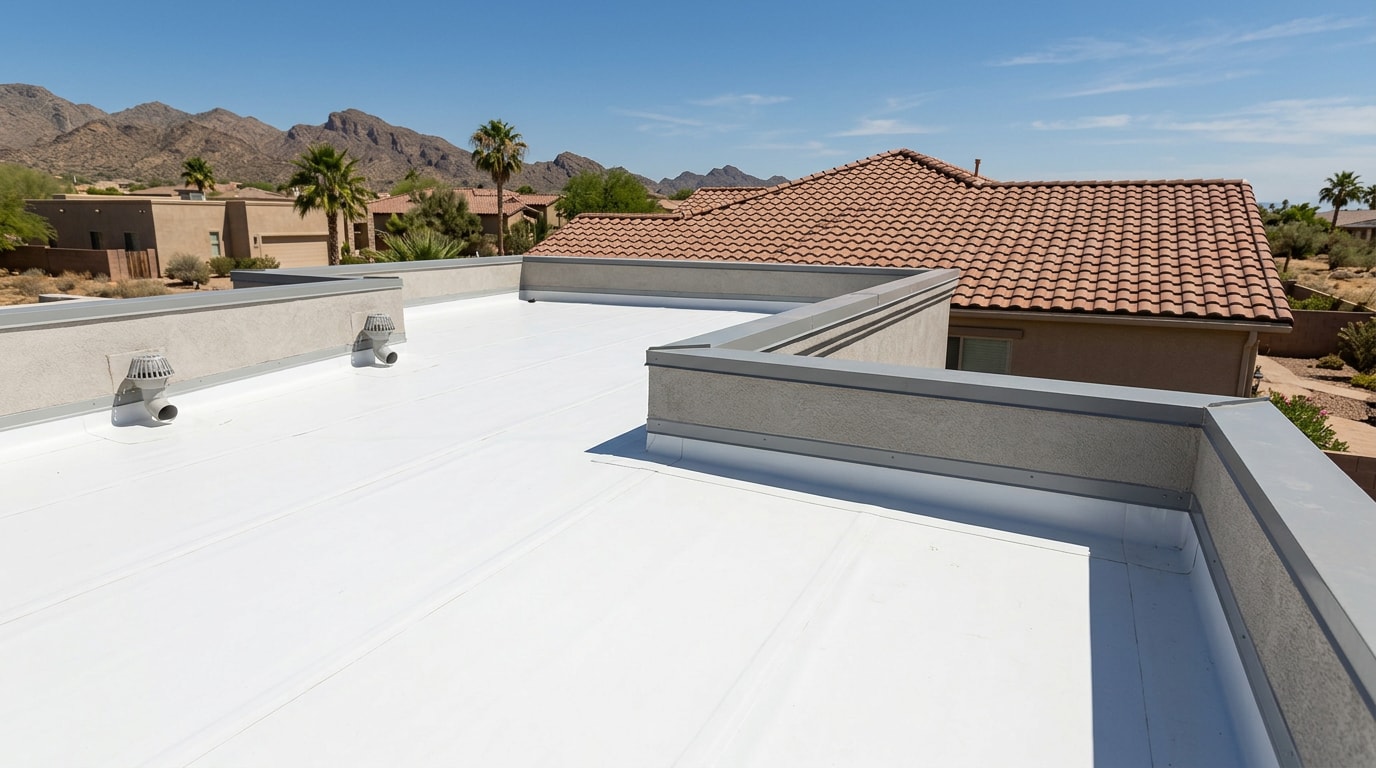
Newer flat-roof installations increasingly use TPO (thermoplastic polyolefin), a single-ply membrane valued for its reflective white surface and lighter installation weight. TPO is a type of cool roof material, meaning it reflects more solar radiation than dark asphalt-based systems, which matters in a climate that regularly tops 110°F in summer. The U.S. Department of Energy notes that reflective roofing can meaningfully cut cooling-energy demand in hot climates, though actual savings depend on insulation and home layout.
Here's how the main options compare for local conditions:
| Material | Typical Lifespan | Heat Reflectivity | Weight | Relative Cost |
|---|---|---|---|---|
| Built-up roofing (BUR) | 15-20 years | Low | Heavy | Budget to mid |
| Modified bitumen | 15-20 years | Moderate with cap sheet | Moderate | Mid |
| TPO | 20-25 years | High | Light | Mid to higher upfront |
| Clay/concrete tile | 40-50+ years | Good | Heavy, needs reinforced framing | Higher |
Cool-roof coatings can also be applied over some existing flat roofs to boost reflectivity without a full tear-off. If you're weighing options, a roof replacement specialist can walk through which system fits your structure and budget, and since many local homes are also adding solar, a solar-ready roof installation makes sure the deck and attachment points are prepped for panel mounts before shingles ever go down.
Shingle and Roof Covering Styles
Flat roofing dominates older Desert Hot Springs neighborhoods, but newer builds and hillside properties often use pitched asphalt or tile roofs. The vocabulary below covers what you'll encounter on those roof types.
Asphalt Shingles
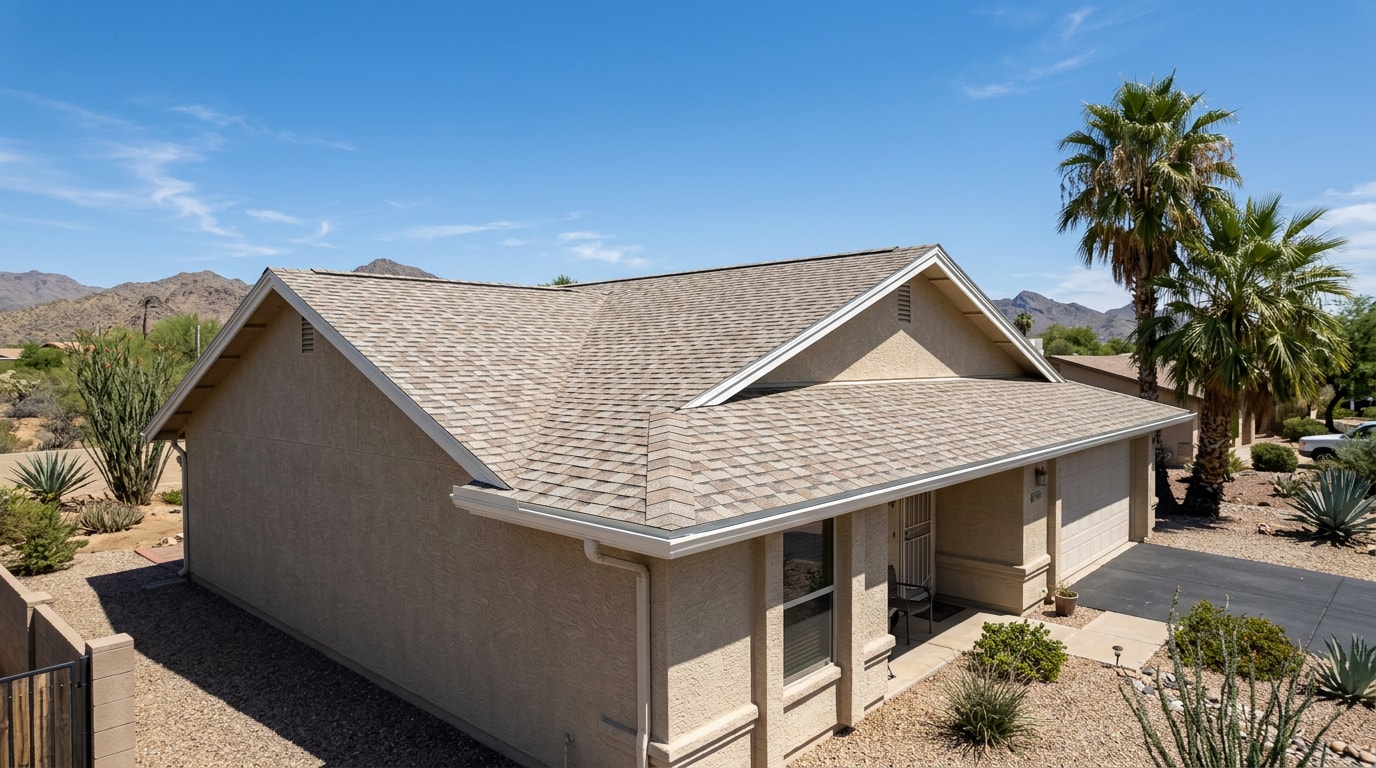
Three-tab shingles are flat, single-layer asphalt shingles with cutouts that create a uniform tab pattern, typically lasting 15-20 years. Architectural shingles (also called dimensional shingles) are thicker, layered for a textured look, and generally hold up 25-30 years under desert sun and wind. For a deeper look at which shingle lines perform best locally, our Thousand Palms shingle guide breaks down options by budget and climate exposure.
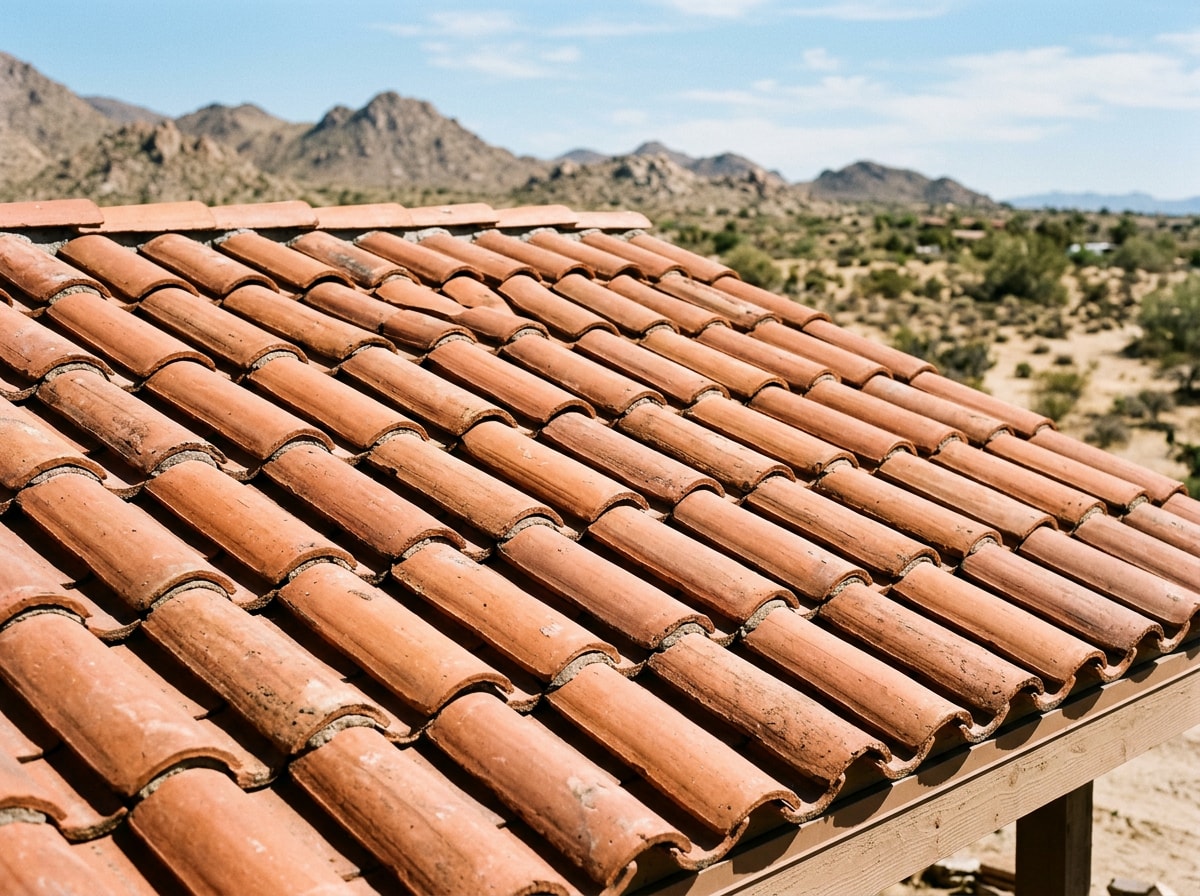
Tile Roofing
Tile roofing comes in two main types:
- Clay tile — fired from natural clay for a classic reddish finish
- Concrete tile — a more affordable alternative molded to mimic clay or slate
Both resist heat exceptionally well, but their weight means a roof needs engineered framing to support them safely.
Metal Roofing
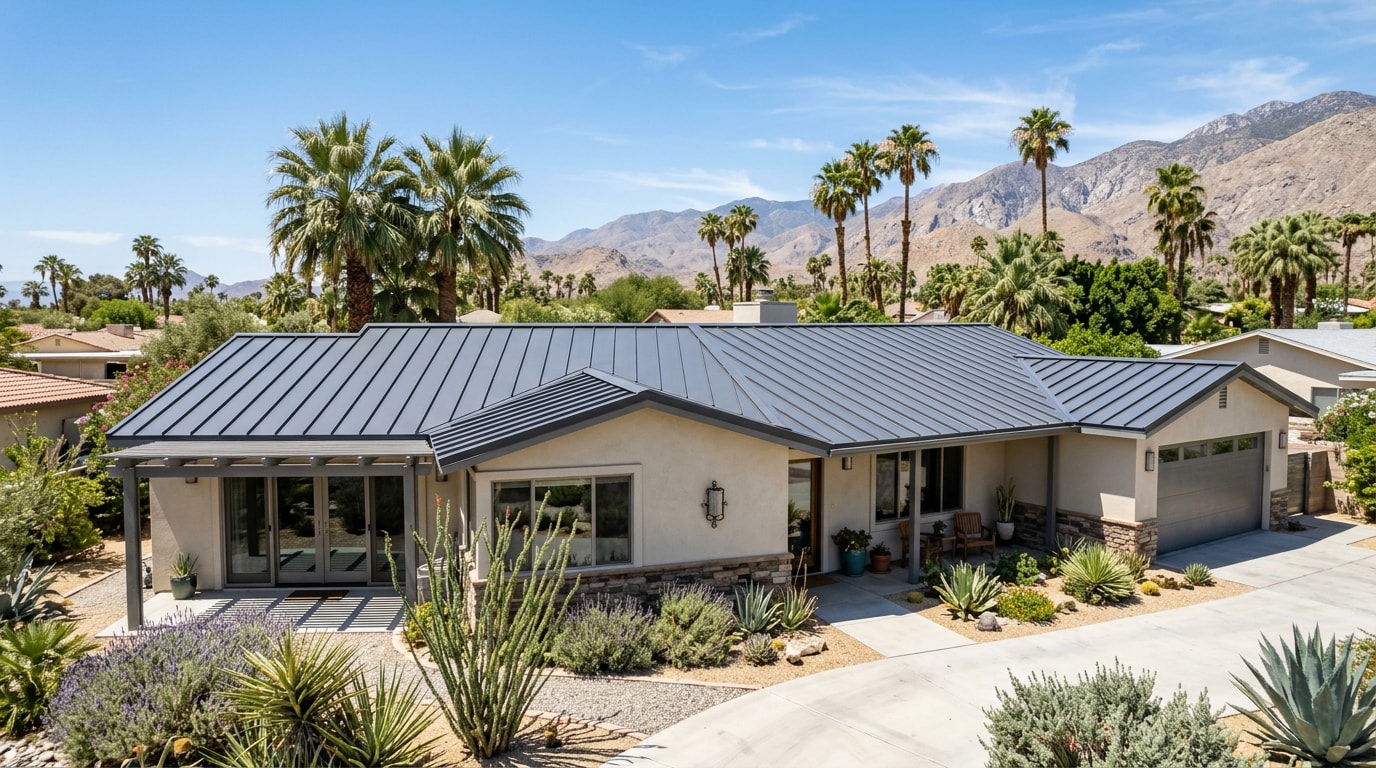
Metal roofing includes standing seam panels, which feature raised interlocking seams for a clean, low-maintenance profile, and metal shingles styled to resemble traditional materials. Metal roofs reflect solar heat well and often exceed 40-50 years of service life when properly installed and maintained.
Wind, Flashing, and Local Failure Points
The San Gorgonio Pass funnels some of the strongest sustained wind in Southern California through this part of the Coachella Valley, and flat roofs take the brunt of it at the edges. Wind pressure that gets under a membrane edge can lift and separate large sections before a homeowner ever notices a problem, which is why perimeter fastening and edge metal need to match the wind-exposure category for the site, not just a generic spec sheet.
Two terms worth knowing in this context:
- Counterflashing — flashing embedded in a wall or parapet that laps down over the base flashing, used where a roof meets a vertical surface
- Parapet — a low wall around the perimeter of a flat roof that requires special flashing at its base and top edge
Building codes address wind resistance for roof coverings directly, and the National Roofing Contractors Association publishes technical guidance that most contractors reference when specifying fasteners for high-wind zones. If your roof is due for an inspection ahead of monsoon season, a roof inspection can catch loose edge metal before it becomes a bigger repair.
Roofing Elements and Features
Beyond the main structure and covering, a few secondary features round out a homeowner's working vocabulary, details that matter more during the region's occasional intense monsoon downpours than people expect.
Gutters are the channels installed along roof edges to collect runoff, and downspouts carry that water down and away from the foundation. Aluminum gutters are the common budget choice, while copper offers more durability at a higher price point.
Roof drainage rarely gets attention until a monsoon storm hits and reveals clogged or undersized gutters. If yours need attention, a roof repair visit can address sizing and material fit alongside any flashing issues found during the same trip.
Roof Measurement and Estimation Terms
Understanding a few measurement terms helps you read a roofing estimate accurately instead of taking the numbers on faith.
- Roofing square — equals 100 square feet of roof area, the base unit contractors use to calculate material and labor costs
- Pitch — the roof's rise divided by its span, usually expressed as a fraction
- Slope — the amount of vertical rise per 12 inches of horizontal run, expressed as a ratio like 4:12
- Prorated warranty — reduces the manufacturer's coverage value over time, so a leak at year 15 of a 20-year warranty may only be partially covered
- Non-prorated warranty — holds full value for its stated term
A 2,000-square-foot roof is roughly 20 squares, though waste factors and roof complexity adjust that number upward. Roofs with more hips and valleys cost more to install than simple gable roofs because each junction requires extra cutting, flashing, and labor time. Material specifications referenced in most contractor bids trace back to ASTM International's construction standards, which is a useful benchmark if you want to compare multiple quotes on equal footing.
Ready to see where your roof stands? Get a free estimate and we'll walk the terminology on your actual roof, not a generic checklist.
A-Z Quick-Reference Glossary
This glossary covers terms not already explained above, so it works as a standalone lookup table.
- Abutment — the point where a roof meets a vertical wall or structure
- Bargeboard — a trim board covering the edge of a gable roof
- Cricket — a small peaked structure built behind a chimney to divert water around it
- Drip edge — a metal strip installed along roof edges to direct water into gutters and away from fascia
- Fascia — the horizontal board along the roof edge that supports the gutter system
- Fasteners — nails, screws, or clips used to secure roofing materials to the deck
- Kickout flashing — a small diverter installed where a roof edge meets a wall, directing water into the gutter instead of behind siding
- Ponding — the accumulation of standing water on a low-slope roof after rainfall
- Purlins — horizontal structural members that support roof decking between rafters or trusses
- Starter shingles — the first row of shingles installed along the eave to seal the bottom edge
- Truss — a prefabricated triangular framework that supports the roof structure
- Underlayment — a water-resistant layer installed beneath the roof covering for added protection
FAQ
What is the terminology for roofing?
Roofing terminology is the vocabulary used to describe a roof's structure, coverings, features, and installation details. It breaks into a few categories: framing and structure, materials and coverings, functional features like gutters and flashing, and measurement terms used in estimates.
What are the four parts of a roof?
Most roofs break down into four core parts: the structure (trusses or rafters), the covering (shingles, tile, or membrane), the underlayment (a protective water barrier), and the ventilation system (soffit and ridge vents). Each part plays a distinct role in keeping water out and air moving properly.
Why is flashing important for a roof?
Flashing prevents water intrusion at vulnerable points like chimneys, valleys, and roof-to-wall junctions. In Desert Hot Springs, wind-driven rain during monsoon storms can push moisture sideways into these junctions, so properly installed flashing matters more than it would in a calmer climate.
What does TPO stand for in roofing?
TPO stands for thermoplastic polyolefin, a single-ply, reflective membrane used mainly on flat and low-slope roofs. It's installed in large sheets and heat-welded at the seams rather than applied in individual shingles.
What's the difference between roof pitch and roof slope?
Pitch is the rise divided by the span, usually written as a fraction like 1/6. Slope is the rise per 12 inches of horizontal run, usually written as a ratio like 4:12. Both describe steepness, just in different formats.
How long does a roof replacement take?
A straightforward asphalt shingle replacement on an average home usually takes one to three days. Flat roof systems, tile roofs, and jobs with more hips and valleys or decking repairs can take longer. A detailed look at what drives timelines and pricing is in our roof repair quote guide for Indio.
What is the lifespan of different roofing materials?
Asphalt shingles typically last 15-30 years, metal roofing and tile roofing often exceed 40-50 years, and built-up or modified bitumen flat roofs run 15-20 years. Desert heat and UV exposure can shorten these ranges compared to milder climates, so treat these figures as general estimates rather than guarantees. Our solar panel installation and roofing teams coordinate closely when a roof and solar array are being planned together, since roof age affects panel mounting decisions either way.